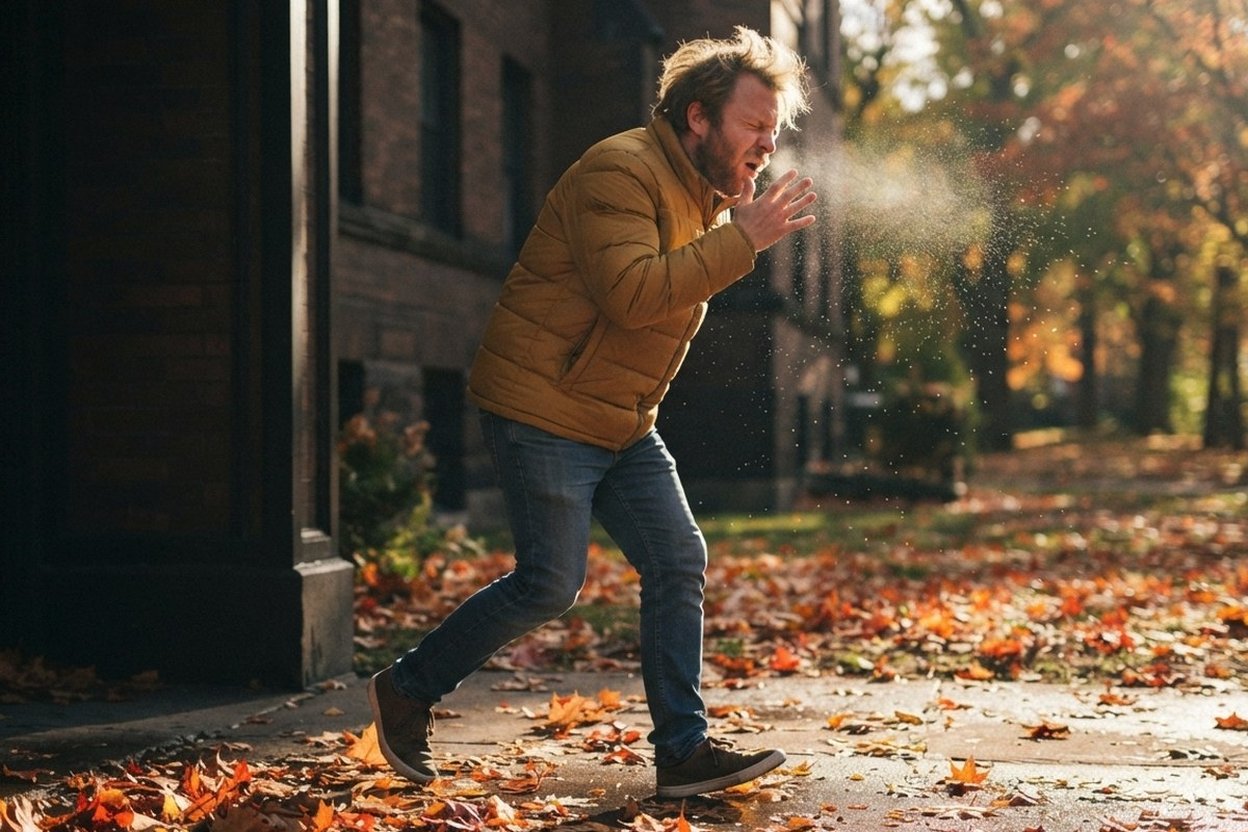
Photic Sneeze: Why Sunlight Makes Some People Sneeze
Step into bright sun and sneeze? You're one of roughly 18 to 35% of people with the photic sneeze reflex, nicknamed ACHOO syndrome. Here's what's going on, from Aristotle to the gene studies.
You walk out of a dark movie theater into a sunny afternoon and sneeze. Then again. If that happens to you, it isn't allergies or a cold. It's a real, inherited reflex, and you're far from alone.
How common is it?
The photic sneeze reflex is estimated to affect 18 to 35% of people. The range is wide because studies ask the question differently and some people only sneeze in very bright light.
Its nickname is a backronym: ACHOO syndrome, short for Autosomal-dominant Compelling Helio-Ophthalmic Outburst. "Autosomal dominant" means it can be passed on by just one parent. If your mom or dad sun-sneezes, there's a good chance you do too.
People have wondered about it for 2,000 years
- Aristotle, around 350 BCE, asked: "Why does the heat of the sun provoke sneezing?" He guessed the sun's heat made the nose sweat.
- Francis Bacon later tested that idea by facing the sun with his eyes closed. No sneeze. With eyes open, sneeze. So it was the eyes, not the heat.
- In 1964, a doctor named Henry Everett named it "the photic sneeze effect."
Why does it happen?
Nobody knows for sure. The leading idea is crossed wires. The optic nerve (which carries signals from the eyes) runs close to the trigeminal nerve (which senses irritation in the nose). A sudden blast of bright light may spill over from one to the other, and the brain reads it as "something's in the nose, sneeze."
A 2010 genetic study found the trait linked to variants on chromosomes 2 and 15, which backs up what families already knew: it's inherited.
Is it dangerous?
Usually it's just funny. But a sudden sneeze at the wrong moment can matter:
- Drivers coming out of a tunnel into bright sun.
- Pilots, especially with sun glare off water during landing.
- Anyone using tools or on a ladder who looks up into the sun.
How to stop a sun sneeze
- Sunglasses and a hat brim before you walk into bright light.
- Look down for a second as you step outside, then let your eyes adjust.
- Press a finger across your upper lip (under the nose) when you feel one coming.
Fall and winter can actually be worse: the sun sits low in the sky, so it hits you straight in the eyes on the drive to work.
Related
- Supertasters: why some people hate broccoli
- Synesthesia: people who taste words and see sounds
- Freckles: what they are and who gets them
This article is for general information, not medical advice.