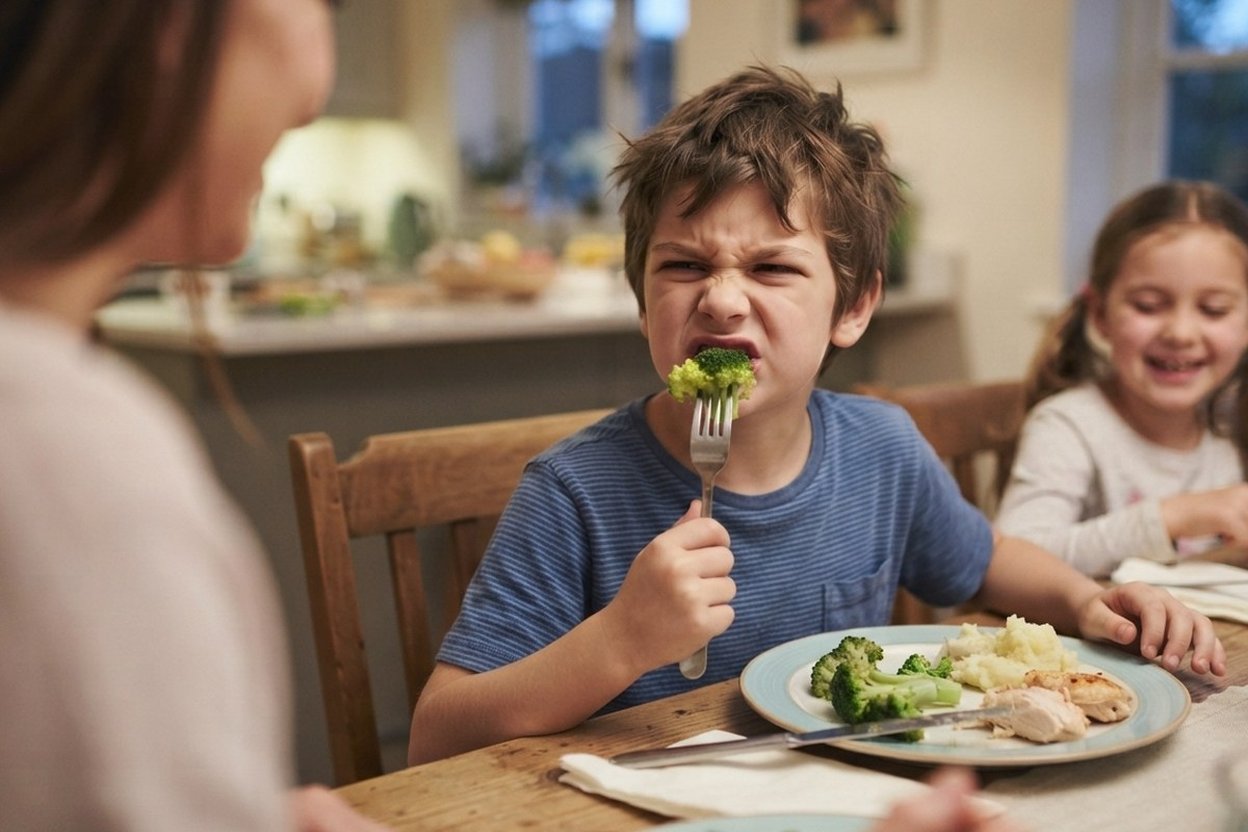
Supertasters: Why Some People Hate Broccoli
About 1 in 4 people are supertasters: bitter foods taste much stronger to them. Here's where the idea came from, the gene involved, the blue food dye test, and what it means at the dinner table.
Some people aren't picky eaters. Their tongues really are working harder. Black coffee, broccoli, Brussels sprouts, kale, grapefruit and dark beer can taste much more bitter to them than to the person sitting next to them. Scientists call them supertasters.
How common is it?
Most estimates split people roughly like this:
- About 25% are supertasters. Bitter tastes are strong, sometimes unpleasant.
- About 50% are medium tasters.
- About 25% are nontasters. Certain bitter compounds barely register at all.
Women are more likely to be supertasters than men.
Where the idea came from
It started with an accident. In 1931, a chemist named Arthur Fox was working with a powder called PTC (phenylthiocarbamide). Some of it blew into the air. A colleague complained it tasted bitter; Fox tasted nothing. Testing friends and family showed that people really did split into tasters and nontasters, and that it ran in families.
Decades later, psychologist Linda Bartoshuk noticed that among the tasters, some people found a similar compound (PROP) intensely bitter. She coined the term "supertaster" in the 1990s.
The gene, and the tongue
Two things seem to be involved:
- A bitter-taste gene called TAS2R38, identified in 2003. Different versions of it explain a lot of the difference in how bitter PTC and PROP taste. But genetics research shows it doesn't explain supertasting by itself; other genes are involved too.
- More taste buds. Supertasters tend to have a much denser crowd of fungiform papillae, the little bumps on the front of the tongue that hold taste buds.
The blue food dye test
You can get a rough idea at home:
- Put a drop of blue food coloring on the tip of your tongue and swallow a couple of times.
- Your tongue turns blue; the papillae stay pink and show up as dots.
- Put a small hole-punch reinforcement ring (about 6 mm across) on the tip and count the pink dots inside it with a mirror or a phone photo.
Lots of dots packed close together suggests supertaster; just a few suggests nontaster. It's a fun test, not a lab diagnosis.
What it means at the table
Supertasters often go easy on:
- Bitter vegetables (broccoli, cabbage, Brussels sprouts, kale)
- Black coffee and strong tea
- Hoppy beer and other alcohol
- Very spicy food (the burn can feel stronger too)
Some studies have linked supertasting to eating fewer vegetables, and others to drinking less alcohol, but the research is mixed. If your kid gags at broccoli, they may not be stubborn; they may just taste it differently. Roasting vegetables, adding a little salt or cheese, or starting with milder greens can help.
Related
This article is for general information, not medical advice.