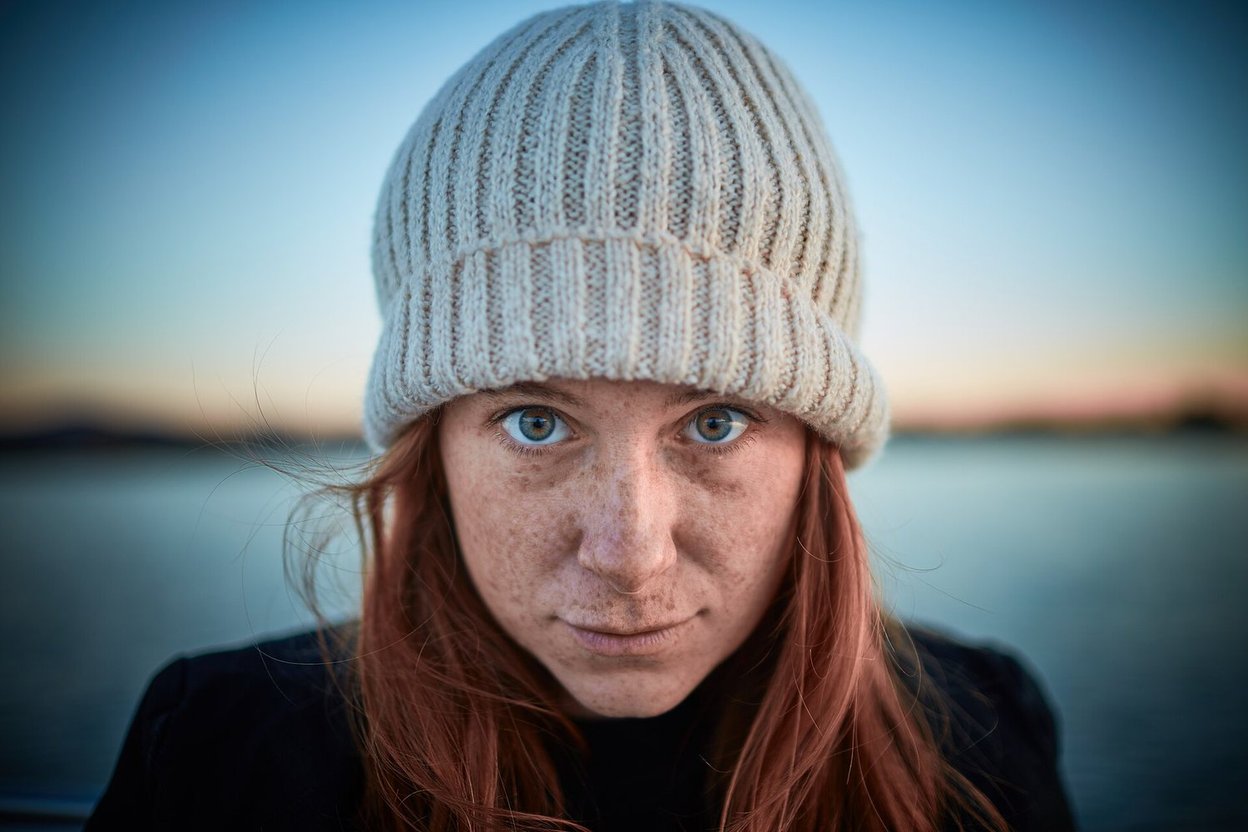
Freckles: What They Are and Who Gets Them
Freckles come from genes and sunshine together. Why some people get them and others don't, why they fade in winter, how they differ from sun spots and moles, and when to get a spot checked.
Freckles are small, flat, tan or light-brown spots on the skin, usually on the face, arms and shoulders. Some people are covered in them, some have a few across the nose, and some never get them at all. The difference comes down to genes and sunlight.
What freckles are
The medical name for common freckles is ephelides. They're tiny areas of skin where pigment-making cells (melanocytes) make more pigment than the skin around them, usually in response to sunlight.
Freckles aren't extra cells. They're the same cells working harder in those spots.
Who gets them
Freckles are strongly linked to genes, especially the MC1R gene, the same gene behind most red hair. People with MC1R variants tend to have:
- Fair skin
- Red or light hair
- More freckles
- A tendency to burn rather than tan
But you don't have to be a redhead to have freckles. People with light brown and blond hair get them too, and so do some people with darker skin.
Freckles and the sun
Freckles need sunlight to show up:
- Babies are rarely born with freckles. They usually appear in early childhood after sun exposure.
- They darken in summer and fade in winter, when there's less sun.
- More sun, more freckles. People who spend more time outdoors often have more of them.
Many people find their freckles fade as they get older.
Freckles vs. sun spots vs. moles
These get confused:
- Freckles (ephelides): small, flat, appear in childhood, darken in summer and fade in winter.
- Sun spots (solar lentigines, sometimes called "age spots" or "liver spots"): usually larger, appear later in life after years of sun exposure, and don't fade in winter.
- Moles (nevi): clusters of pigment cells that can be flat or raised and usually stay the same year-round.
Are freckles a health concern?
Freckles themselves are harmless. But they're a sign that your skin is sensitive to the sun. People with lots of freckles tend to burn easily and may have a higher risk of skin damage from sun exposure.
- Wear sunscreen and protective clothing.
- Watch for changes. See a dermatologist if a spot changes size, shape or color, bleeds, itches, or looks different from your other spots. Dermatologists use the "ABCDE" warning signs: asymmetry, irregular border, uneven color, diameter larger than a pencil eraser, and evolving (changing).
Freckles in culture
For a long time, freckles were seen as something to cover up. Today, many people love them, and "faux freckles" drawn on with makeup have been a beauty trend.
Freckles and red hair
Freckles and red hair often go together because of the shared gene. See red hair facts.
This article is for general information, not medical advice. See a dermatologist about any spot that worries you.
Sources (2)
American Academy of Dermatology: Melanoma signs (ABCDEs); MedlinePlus Genetics: MC1R gene.
Photo: Smith Mountain Lake redhead (Unsplash).jpg) by Christopher Harris chrisrossharris, CC0.