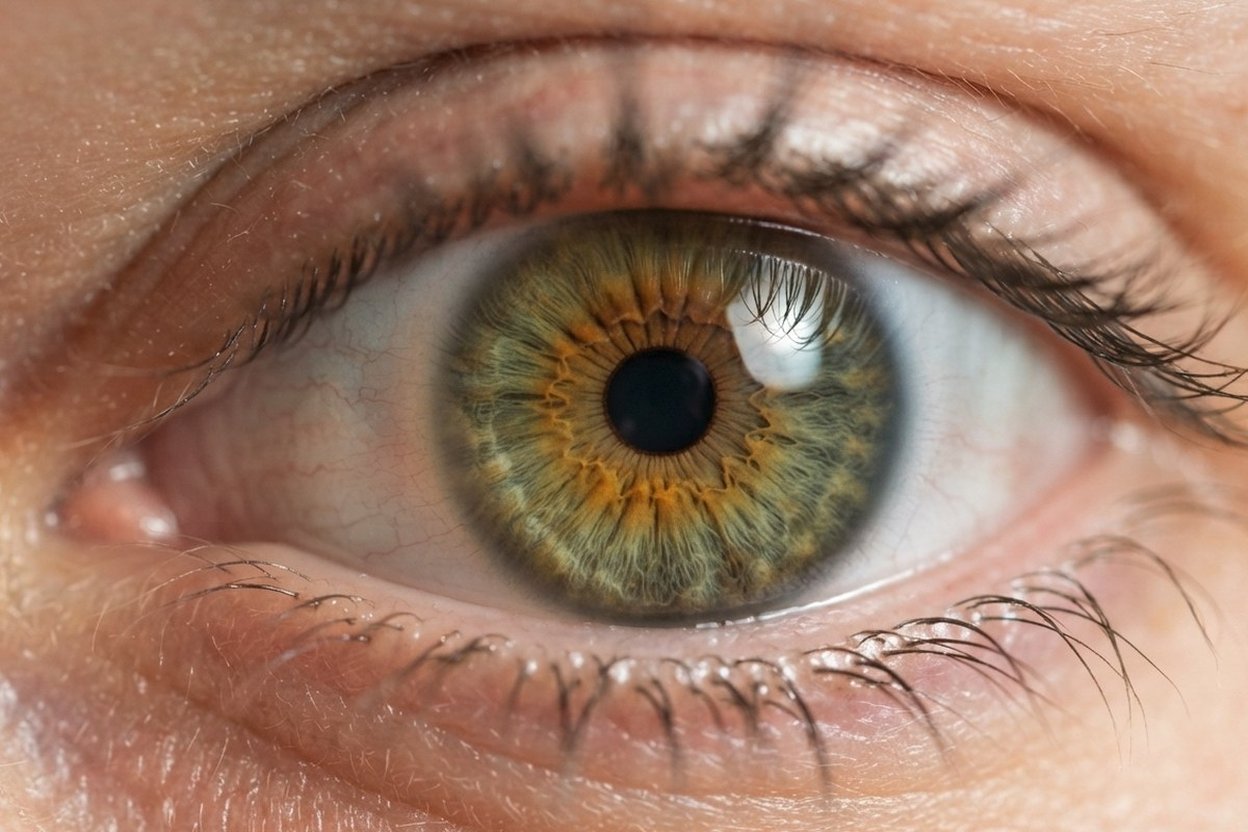
Can Your Eye Color Change as an Adult?
Baby eyes change color, but what about adult eyes? Here's when a change is just lighting, what can really change eye color later in life, and when to see an eye doctor.
Most people's eye color is set by the time they're toddlers. But "my eyes look different lately" is a common question, and sometimes the answer matters. Here's what can, and can't, change your eye color as an adult.
Babies: yes, almost always
Many babies are born with blue or blue-gray eyes that darken as pigment builds up. The American Academy of Ophthalmology says most babies have their permanent eye color by about nine months old, though some keep changing a little into the toddler years.
Eye color comes from melanin in the iris, controlled by several genes; the two biggest are OCA2 and HERC2. More melanin means browner eyes; less means blue, gray or green.
Adults: usually it's the light
Most "my eyes changed" moments in adults aren't real changes:
- Lighting. Blue, gray, green and hazel eyes look very different in sun, shade and indoor light.
- Clothes and makeup. A green shirt makes hazel eyes look greener.
- Pupil size. A big pupil in dim light leaves less iris showing, so the eye looks darker.
Gray eyes are famous for this: they can look silver, blue or green depending on the day.
When eye color really can change
Real changes in adults are uncommon, and usually have a cause. The American Academy of Ophthalmology lists several, including:
- Glaucoma eye drops. Some prostaglandin glaucoma drops (latanoprost is the best known) can permanently darken the iris, especially in hazel eyes. Doctors warn patients about this before starting them.
- Iris freckles and nevi. Sun exposure can add freckles to the iris; a nevus is like a mole on the iris.
- Inflammation. Uveitis and a condition called Fuchs heterochromic iridocyclitis can change the color of one eye.
- Pigment dispersion syndrome, where pigment rubs off the back of the iris.
- Horner's syndrome, a nerve problem that can lighten one iris.
- Injury to the eye.
Some changes aren't the iris at all: a gray-white ring around the cornea (arcus) with age, or a cloudy lens from cataracts.
When to see a doctor
The AAO's advice is plain: if you notice a distinct color change in either eye, see an ophthalmologist right away. That goes double if only one eye changed, if there's pain, redness, blurry vision or light sensitivity, or if a new dark spot shows up in the iris. Two different colored eyes since birth is usually harmless; two different colors that appear later deserve a checkup. Our heterochromia guide explains the difference.
Related
- Green eyes: the rarest common eye color
- Gray eyes vs. blue eyes
- Heterochromia: two different colored eyes
This article is for general information, not medical advice. See an eye doctor about any change in your eyes.