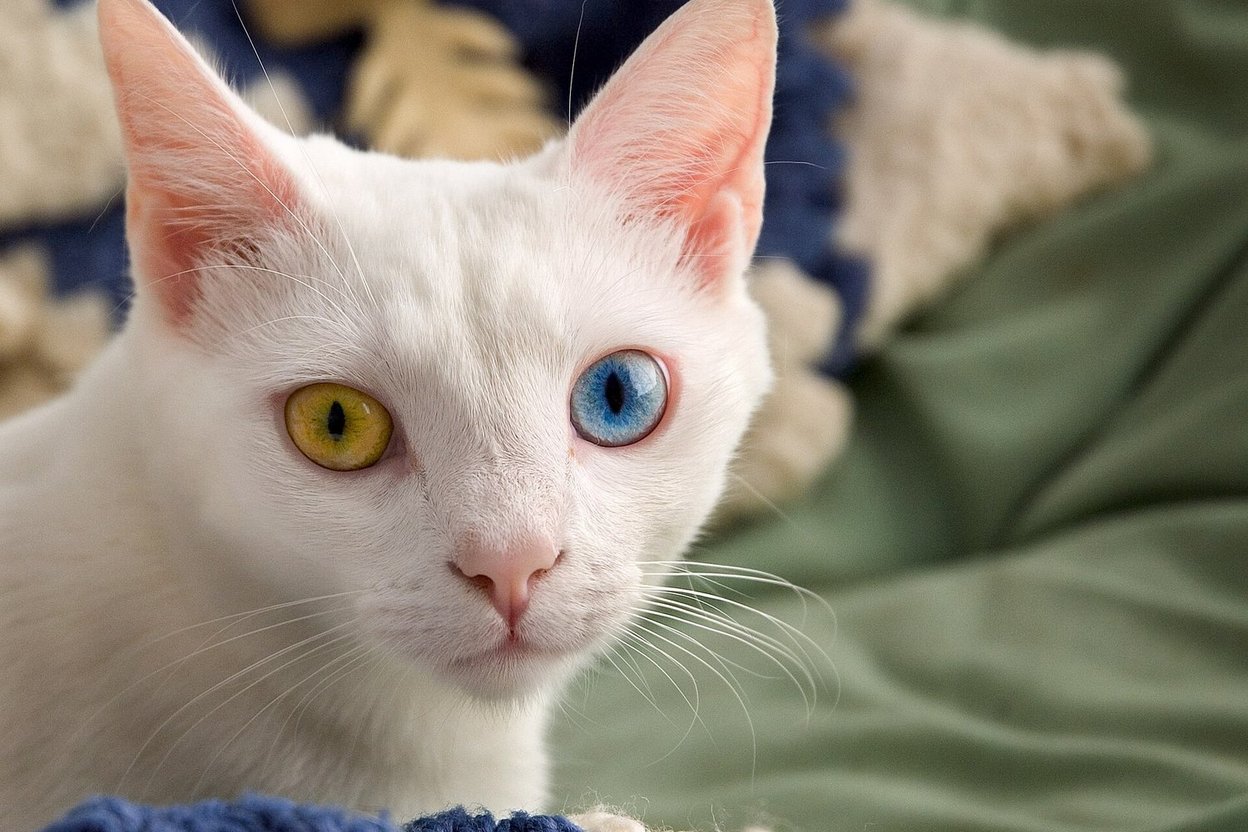
Heterochromia: Why Some People Have Two Different Eye Colors
One blue eye and one brown, or a splash of a second color in one iris. The three types of heterochromia, what causes them, how rare it is, and why it's common in some cats and dogs.
Most people's eyes match. A small number of people have heterochromia: two different-colored eyes, or two colors within one eye. It's striking, usually harmless, and much more common in some animals than in people.
The three types
- Complete heterochromia: one iris is a completely different color from the other. For example, one blue eye and one brown.
- Sectoral (partial) heterochromia: part of one iris is a different color, like a wedge or patch of brown in a blue eye.
- Central heterochromia: a ring of a different color around the pupil, sometimes with spikes radiating out. This one is common enough that many people with "hazel" eyes actually have it.
What causes it
Eye color comes from melanin, the same pigment behind skin and hair color. Heterochromia happens when melanin is produced, delivered or concentrated differently in one eye or one part of an eye.
- Present from birth (congenital): usually harmless and often inherited or a random developmental quirk. In rare cases it's part of a genetic syndrome.
- Acquired later: from an eye injury, inflammation, certain eye-drop medications (some glaucoma drops can darken the iris), or, rarely, other conditions.
Any new change in eye color in an adult should be checked by an eye doctor.
How rare is it?
Complete heterochromia is uncommon in people. One estimate puts it at fewer than 200,000 people in the United States. Central heterochromia is far more common and often goes unnoticed.
Common in cats and dogs
Heterochromia shows up much more often in some animals: Turkish Van and Khao Manee cats, Siberian Huskies, Australian Shepherds, and some horse and cattle breeds. White and pinto coloring patterns are linked to it.
Famous cases
Historical accounts describe the Byzantine Emperor Anastasius I as having one light blue eye and one dark eye, and the German writer Goethe is said to have had heterochromia. Among modern public figures, actress Kate Bosworth has sectoral heterochromia, and pitcher Max Scherzer has one blue eye and one brown.
Related rare traits
Heterochromia sits alongside other eye-color rarities: green eyes are among the rarest eye colors worldwide. See also left-handedness and RH-negative blood.
Source (1)
Photo: June odd-eyed-cat by Keith Kissel, CC BY 2.0.