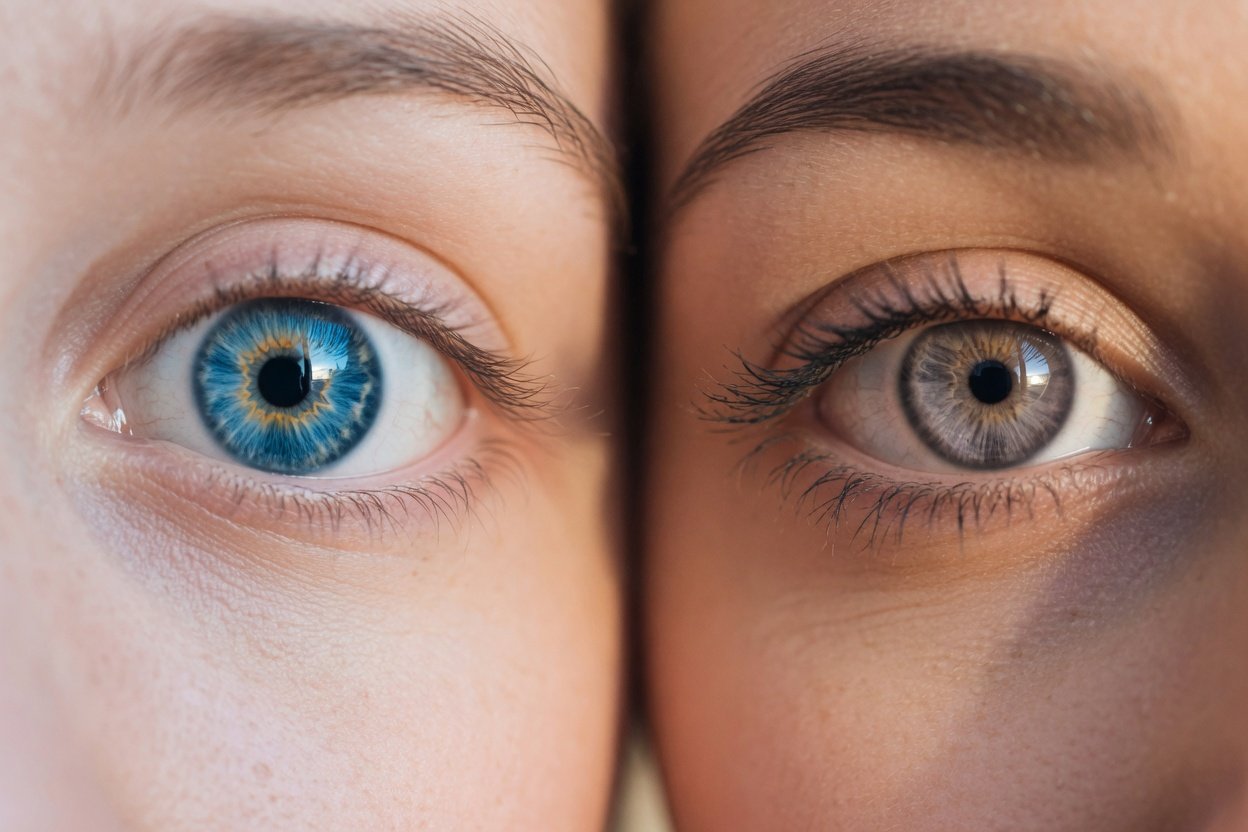
Gray Eyes vs. Blue Eyes: What Makes the Difference
Gray and blue eyes both have very little pigment. The difference is in how the front of the iris scatters light. Here's the science, how rare gray eyes are, and why they seem to change color.
Gray eyes and blue eyes get mixed up all the time. Some people with gray eyes have been told their whole lives that their eyes are blue. They're close cousins, but they aren't the same, and the difference isn't pigment at all. It's structure.
Neither one is really "colored"
There is no blue or gray pigment in the human eye. The only pigment in the iris is melanin, the same brown pigment in skin and hair. Brown eyes have a lot of it in the front layer of the iris. Blue and gray eyes have very little.
So where does the color come from? Light.
Blue eyes: the sky effect
The front layer of the iris is called the stroma. In blue eyes, the stroma has little melanin and a fairly loose, open structure. When light hits it, the short blue wavelengths scatter back toward you more than the others. It's similar to the reason the sky looks blue. The color you see is scattered light, not paint.
Gray eyes: more collagen
Gray eyes also have very little melanin, but the stroma is thought to contain more collagen, packed more densely. Those larger, denser fibers scatter all colors of light more evenly instead of favoring blue. The result is a washed-out, silvery or smoky color instead of a clear blue.
That's why gray eyes often look:
- Silver or steel in bright light.
- Blue-gray next to a blue shirt.
- Greenish-gray in some lighting.
- Darker in dim rooms.
They aren't changing. The light around them is.
How rare are gray eyes?
Some estimates put gray eyes at around 3% of people worldwide or less, which would make them rarer than green. Hard numbers are scarce, because many surveys don't list gray separately and lump it in with blue. Gray eyes are most common in Northern and Eastern Europe.
Blue vs. gray at a glance
- Melanin: very little in both.
- Stroma: looser, with less collagen, in blue eyes; denser, with more collagen, in gray eyes.
- How light scatters: favors blue in blue eyes; more even in gray eyes, which washes out the color.
- Looks like: clear, bright blue vs. silver, smoky or steel.
- Changes with lighting: a little for blue, a lot for gray.
Can gray eyes change color?
In babies, yes. Many babies of European descent are born with blue or gray eyes that darken in the first year or two as melanin builds up. In adults, a real change in eye color is unusual. If an adult's eye color changes noticeably, especially in one eye, see an eye doctor. Our heterochromia guide covers some of the conditions that can do it.