Why Winter Makes You Hungrier, and How Big the Effect Really Is
Winter hunger is real but modest. See what studies show about cold, daylight, holidays and activity, and why results vary by person.
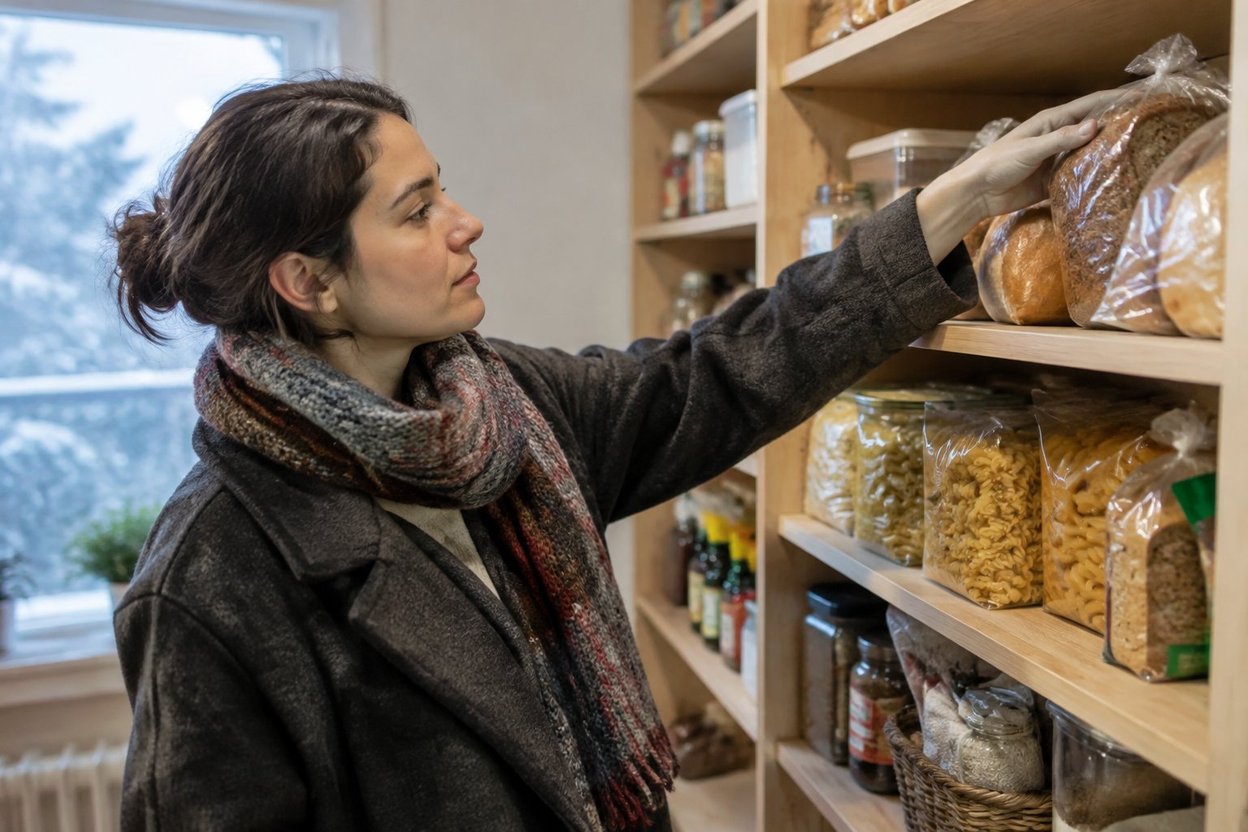
The first cold evening of fall arrives, and you find yourself standing at the pantry wanting something warm and starchy, like pasta, bread or the Halloween candy you bought "for the kids." Winter hunger is a real thing, but it isn't one thing. Studies suggest many people eat somewhat more in the colder months, and they point to several causes acting together: cold, shorter days, holidays and less movement. The effect is also smaller and less consistent than the folklore suggests.
The short answer
No single switch turns on winter hunger. Researchers who study seasonal eating describe it as a pile-up of small pushes. A 2023 review in Frontiers in Nutrition lists the proposed drivers as food availability, temperature, daylight, holidays, emotions and physical activity. In everyday life most of these move in the same direction at once. It gets colder and darker, people move less, and the calendar fills up with food-centered celebrations.
The same review concludes that energy intake tends to be higher in winter and spring and lower in summer. It also says plainly that the evidence is inconsistent. Some studies find a clear winter rise, some find a peak in a different season, and some find no seasonal pattern.
So the honest version is this: if you feel hungrier when the weather turns, you're not imagining it, and you're in good company. But the average effect across populations is modest, it varies a lot from person to person, and the "why" is part established fact and part working theory. The sections below sort out which is which.
What the numbers show
The most-cited summary is a 2016 meta-analysis by Stelmach-Mardas and colleagues in the European Journal of Clinical Nutrition. Pooling studies from different countries, it found that energy intake was higher in winter than in summer. Spring, though, came out highest of all. Even the strongest evidence for "winter eating" doesn't put winter at the top.
Individual studies pull in different directions:
- A large null result. A four-country study of more than 44,000 people found no significant seasonal differences in nutrient intake. A US study of adults aged 40 to 60 also found none.
- A big winter jump. A study of adults 65 and older in Ankara, Turkey, found they ate about 557 more calories a day in winter (men) and 343 more (women).
- A fall peak. A US study led by Yunsheng Ma followed 593 mostly overweight adults in central Massachusetts and asked them to recall their meals each quarter. As reported by Reuters Health, intake was highest in fall, about 86 calories a day more than in spring.
Why do the studies disagree so much? The 2023 review points to differences in climate, culture and survey methods. A winter in Turkey isn't a winter in Massachusetts. Diets built around a harvest season shift differently from diets built around a supermarket. And intake is usually measured by asking people to remember or record what they ate, which is error-prone in any season.
The weight change in the Massachusetts study was small. Body weight varied by about one pound over the year, peaking in winter, which was also when participants were least active.
Cold itself
The most intuitive explanation is that cold makes the body burn more fuel, so it asks for more. A 2025 study in Physiology & Behavior tested a version of this directly. Fifteen healthy adults each sat for 30 minutes in three conditions: cold water (16 °C, about 61 °F), warm water (35 °C, about 95 °F) and room air (26 °C, about 79 °F). Afterward they were served pasta and ate until comfortably full.
After the cold water, they ate about 2,783 kJ (roughly 665 calories). After warm water they ate about 1,817 kJ (about 434 calories), and after air about 1,894 kJ (about 453 calories). That's roughly a third more food after the cold.
The cold did burn more energy, but not much more: about 224 kJ during the cold immersion against about 135 kJ in warm water. The extra food far outweighed the extra burn. The volunteers also didn't report feeling hungrier, even though they ate more. One thing the researchers noticed was that core temperature dipped for about 15 minutes after the cold dunk. They suggest this "after-drop" may help trigger eating, but they say it needs more research.
The limits matter. Fifteen people is a small sample. The study didn't track what people ate for the rest of the day or measure appetite hormones. And half an hour in cold water is not the same as walking to the car on a chilly morning. The broader 2023 review says cold exposure slightly increases intake and heat decreases it, possibly through the appetite hormones leptin, ghrelin and peptide YY. "Slightly" is the important word there.
Less light, serotonin and carb cravings
Cold explains some of the hunger, but not the particular pull toward bread, pasta and sweets. For that, researchers have looked at light.
The clearest link comes from a clinical condition. The US National Institute of Mental Health (NIMH) lists overeating, "particularly with a craving for carbohydrates" that can lead to weight gain, as a symptom of winter-pattern seasonal affective disorder (SAD). SAD is a form of depression that comes and goes with the seasons. NIMH says it is more common in northern regions where winter days are shorter, and that it affects women much more often than men.
On the mechanism, NIMH describes several leads that are still under investigation:
- Serotonin. People with winter-pattern SAD appear to have reduced activity of serotonin, a brain chemical involved in mood.
- Vitamin D. Low vitamin D, which drops when there's less sunlight, may play a part in that serotonin change, along with problems in the molecules that keep serotonin levels steady.
- Melatonin. People with SAD may produce too much melatonin, the hormone tied to darkness and sleep.
It's tempting to stretch this into an explanation for everyone's winter snacking, but that step isn't established. The 2023 review calls the link between daylight, serotonin and everyday appetite speculative. It also notes that SAD may reduce appetite in some people instead of increasing it. Carb cravings are a recognized feature of a clinical condition. Whether shorter days nudge appetite in the general population is still an open question.
Holidays, habits and activity
Some of the best-supported causes are the least mysterious. From late October to New Year's, the calendar is packed with food: Halloween candy, then Thanksgiving on November 26, then a month of parties, cookies and leftovers.
The 2023 review notes that the winter holidays bring indulgent meals and more eating out, and that obese adults in one line of research gained weight over winter vacations. It also notes that people spend more time sitting in winter. Shorter, colder days mean fewer walks, less yard work and more evenings on the couch. That fits the Massachusetts study, where weight peaked in winter at the same time activity hit its low.
Ma, who led that study, put part of the winter weight change down to calorie-dense holiday foods. He warned that a pound a year adds up: "in ten years, this becomes 10 pounds." That's his extrapolation, not something the study measured, but it's why a small seasonal effect can still matter over time.
What to do with this
Winter hunger is real but modest, so it calls for attention more than alarm. A few points follow from the evidence:
- Notice your triggers. Is it the cold walk home, the dark 5 p.m. sky, the office candy bowl or the weekend parties? Different causes call for different fixes.
- Watch the activity drop. Less movement in winter is one of the better-documented changes, and it's one of the easier ones to plan around.
- Expect the holidays. Much of the seasonal bump is tied to specific days and events, not the whole season.
- Remember the variation. Plenty of people show no seasonal change at all. Your pattern may not match the averages.
One distinction matters more than the rest. Wanting more pasta on a cold night is ordinary. Persistent low mood with overeating, oversleeping or withdrawal that comes back every winter is different, and it's worth raising with a doctor.
Sources (8)
- Frontiers in Nutrition (2023): review of seasonal variation in energy intake
- Stelmach-Mardas et al. (2016), European Journal of Clinical Nutrition
- ATU repository: Seasonality of food groups and total energy intake, systematic review
- PubMed: US study of seasonal intake in adults aged 40–60
- NBC News / Reuters Health (2005): Ma study on seasonal eating and weight
- Bournemouth University eprints: Grigg et al. (2025), Physiology & Behavior
- PsyPost: New study uncovers a surprising effect of cold water immersion
- NIMH: Seasonal Affective Disorder