Red Hair Facts: Why Only About 2% of People Are Redheads
Natural red hair is the rarest hair color in the world. The gene behind it, where redheads are most common, how two brown-haired parents can have a redheaded child, and the myths that won't die.
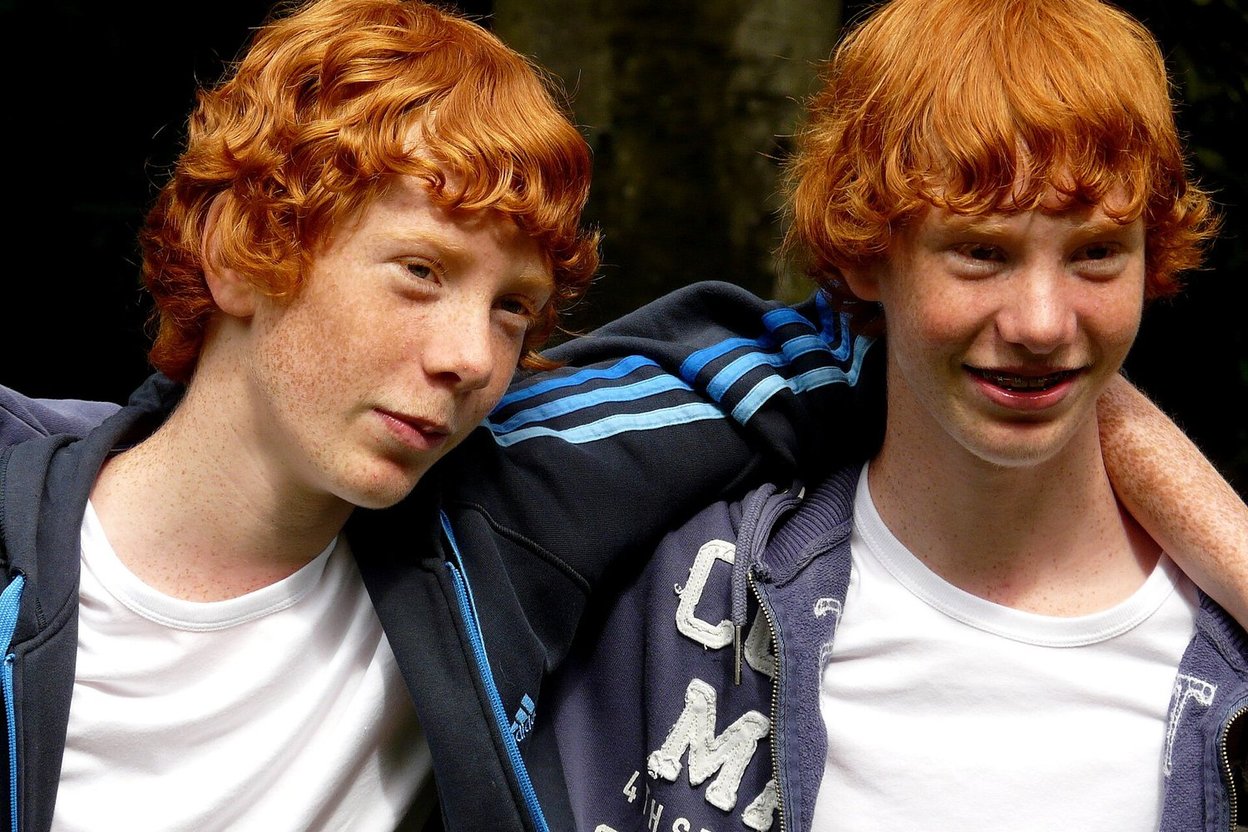
Natural red hair is the rarest hair color on Earth. Estimates usually put it at about 1 to 2 percent of the world's population. In some places it's far more common, and in others it's almost never seen. Here's what makes a redhead, and some of the facts and myths that come with it.
The gene behind red hair
Red hair comes mostly from variants of one gene: MC1R (melanocortin 1 receptor). It controls which kind of pigment your hair and skin make:
- Eumelanin, the dark brown-black pigment.
- Pheomelanin, the red-yellow pigment.
When MC1R works normally, the body makes mostly eumelanin. Certain variants of MC1R switch the balance toward pheomelanin, which gives red hair, fair skin and often freckles.
Researchers have found other genes that play a part too, but MC1R is the big one.
How two brown-haired parents can have a redhead
Red hair is mostly recessive. In most cases, a child needs to inherit a red-hair variant of MC1R from both parents to be a redhead.
That means two parents with brown or blond hair can each carry one copy without showing it. If both pass that copy on, their child can be a redhead. It's why red hair can seem to "skip" generations.
Where redheads are most common
Red hair is most common in northwestern Europe:
- Scotland and Ireland are usually cited as having the highest share of redheads, with estimates often around 10 percent or more of the population, and a much larger share carrying at least one red-hair variant.
- Wales, England and parts of Scandinavia also have higher than average numbers.
- Red hair also appears in other populations, including in parts of North Africa, the Middle East and Central Asia, though less often.
Facts about redheads
- Red hair holds its color well. It tends to fade over time rather than turning gray right away, often going through strawberry blond and silvery-white with age.
- Freckles and fair skin usually go along with it, which means redheads tend to burn easily. Sunscreen matters.
- Vitamin D. Some researchers think fair skin helped people in cloudy northern climates make vitamin D from limited sunlight, though that idea is still debated.
- Anesthesia and pain. Studies have found that redheads can need more of certain anesthetics.
Myths about redheads
- "Redheads are going extinct." No. The gene variants aren't disappearing. Red hair only shows up when a child gets two copies, but the variants are carried by many people.
- "Redheads have fiery tempers." No evidence. It's a stereotype.
- "Red hair means Irish." Many redheads have no Irish ancestry at all.
Red + blue
The rarest combination of common traits is often said to be red hair with blue eyes, since both are recessive traits. Green eyes are also more common among redheads than in the general population. See green eyes.
Famous redheads
Some of the best-known comedians are redheads too. See red-headed comedians, including Vanessa Bayer.
This article is for general information, not medical advice.
Sources (2)
MedlinePlus Genetics: Is hair color determined by genetics?; MedlinePlus Genetics: MC1R gene.
Photo: Redhead twins by Eddy Van 3000, CC BY-SA 2.0.