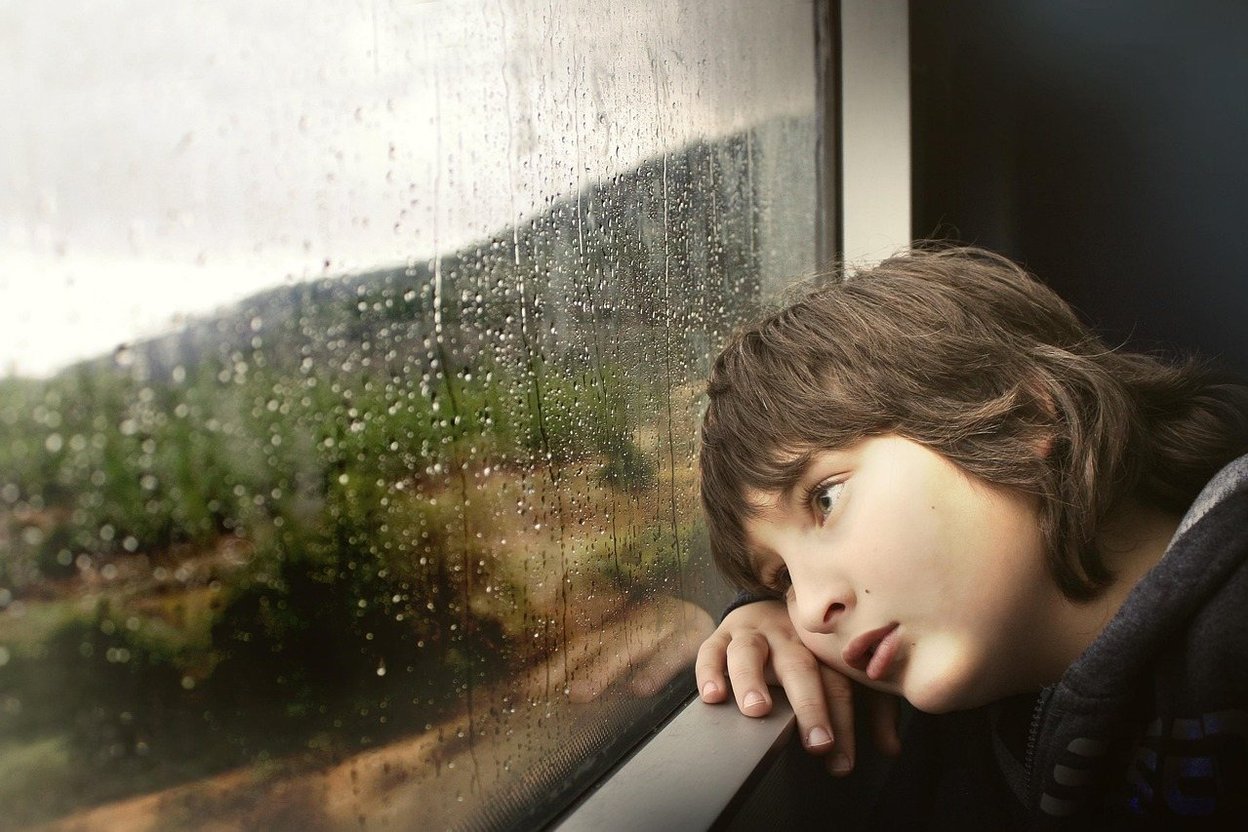
What Is Seasonal Affective Disorder and How Common Is It?
Learn what seasonal affective disorder is, how common it is (about 5% of US adults), who gets it, and the main treatment options.
It's mid-October. You leave work and it's already getting dark, and getting out of bed feels harder than it did in July. For most people that's just the "winter blues." For some, it's seasonal affective disorder (SAD): depression that comes back at the same time every year, most often in fall and winter. About 5% of US adults have it, according to the American Psychiatric Association, and a 2025 worldwide analysis lands almost exactly there. Here's what it is, who gets it and why the numbers vary.
What SAD is and how common it is
The National Institute of Mental Health (NIMH) describes SAD as a type of depression with a recurring seasonal pattern. Symptoms last about four to five months of the year. The key word is recurring. One bad February doesn't count. In the UK, the NHS says a diagnosis may be made when symptoms have shown up at the same time of year for two years or more.
On numbers, the American Psychiatric Association (APA) says about 5% of US adults have SAD. It adds that the condition typically lasts about 40% of the year. NIMH gives no exact figure and says only that "millions of Americans" experience it.
The largest recent estimate is a 2025 meta-analysis in the Journal of Affective Disorders. It pooled 24 studies with 32,866 participants from around the world and found a SAD prevalence of 5.01%. It also counted a milder form, called subsyndromal SAD, which falls short of full diagnostic criteria. That form was nearly twice as common, at 9.37%.
Published figures still range from about 1% to 10%, the range an Ohio State Wexner Medical Center psychologist, D. Gage Jordan, PhD, gives. The spread comes mostly from how SAD is measured: which questionnaire is used, where the study took place, and whether milder cases are counted. A fair summary is roughly 1% to 10% depending on the study, with about 5% the most often cited estimate.
Symptoms and the two patterns
Most people think of SAD as a winter condition, and the winter pattern is the more common one. NIMH says it usually starts in late fall or early winter and lifts in spring and summer. A summer pattern exists too, but it is much rarer. The 2025 meta-analysis put summer-type SAD at just 0.57%.
Both patterns share the core symptoms of depression. NIMH and the APA list:
- Loss of interest in things you used to enjoy
- Fatigue and low energy
- Trouble concentrating
- Feeling worthless or guilty
- Thoughts of death or suicide
The two patterns then split in some telling ways.
Winter pattern: oversleeping, overeating (especially craving carbohydrates), weight gain and pulling away from other people. It can feel a bit like hibernation.
Summer pattern: trouble sleeping, poor appetite and weight loss, restlessness, agitation and anxiety.
Officially, SAD isn't a separate diagnosis. The DSM-5-TR, the diagnostic manual used by US clinicians, classifies it as major depressive disorder with a seasonal pattern. In other words, it is clinical depression with a calendar attached.
If you or someone you know is having thoughts of suicide, you can call or text 988, or chat at chat.988lifeline.org, to reach the 988 Suicide & Crisis Lifeline. It's free, confidential and open 24/7.
Where and who: latitude, sex and age
If winter darkness plays a role, you'd expect more SAD where winter days are shortest, and that's generally what researchers find. Jordan, the Ohio State psychologist, cites about 1% of people in Florida compared with about 9% in Alaska. NIMH lists living farther north, in places with shorter winter daylight such as Alaska or New England, as a risk factor.
The 2025 meta-analysis supports this. It found a significant positive link between latitude and both SAD and its milder form. It found no such link for summer-type SAD, which makes sense if that pattern has different triggers.
Still, latitude doesn't explain everything. Not every study finds the north–south pattern, and some research has found little or no effect from latitude. It's best read as a strong trend that is still being debated. Climate, genes, culture and how much time people spend indoors may all play a part.
Sex is a clearer pattern. NIMH says SAD occurs much more often in women than in men. Jordan puts it at about four times as often, though that ratio is one expert's estimate and not an official figure.
Age matters too. According to the APA, SAD typically begins between ages 18 and 30.
NIMH lists a few other risk factors:
- Already having depression or bipolar disorder (especially bipolar II)
- Other mental health conditions, such as ADHD or an anxiety disorder
- A family history of mental illness
What causes it
The causes of SAD are not fully understood. Both NIMH and the NHS say so plainly. The main ideas are theories, and most of them focus on light.
For the winter pattern, researchers point to a few possible links:
- Serotonin: lower activity of this brain chemical, which helps regulate mood
- Melatonin: too much of this sleep-related hormone, which the body makes in darkness
- The body clock: less daylight may throw off the daily rhythms that govern sleep, mood and hormones
- Vitamin D: a possible shortage, since the skin makes vitamin D from sunlight
The NHS describes the same general picture: shorter winter days affect melatonin, serotonin and the sleep-wake cycle.
The summer pattern is even less understood. NIMH notes that ideas such as sleep disruption from long days and heat haven't been systematically tested.
How it's treated
Because SAD follows the calendar, treatment can too. There are four main approaches.
Light therapy. This means sitting near a bright light box, typically 10,000 lux, which is far brighter than ordinary indoor lighting. NIMH describes about 30 to 45 minutes a day, usually in the morning, from fall to spring. The APA says 20 minutes or more, and that many people notice improvement within one to two weeks. The evidence isn't settled everywhere, though. In the UK, the NHS says light therapy usually isn't offered on the NHS because the evidence is limited. It also advises talking to a doctor first, because the lamps may not suit people with certain eye conditions or on certain medicines.
CBT-SAD. This is a version of cognitive behavioral therapy adapted for SAD. In a direct comparison described by NIMH, it worked as well as light therapy, and its benefits seemed to last longer over two winters.
Antidepressants. SSRIs are commonly used. Extended-release bupropion is FDA-approved specifically to prevent seasonal episodes when taken daily from fall through early spring. NIMH notes that antidepressants usually take four to eight weeks to work, which is one reason timing matters.
Vitamin D. It may help winter-pattern SAD, but study results are mixed.
Timing is a big part of SAD care. For people with winter-pattern SAD, prevention-focused treatment usually starts in the fall, before symptoms are at their worst. That way, by Thanksgiving it's already working, and they aren't playing catch-up in January.
It's also worth seeing a doctor before deciding it's "just" SAD. The APA recommends a medical evaluation to rule out conditions that cause similar symptoms, such as hypothyroidism. Only a professional can sort out what's behind the fatigue and low mood, and which treatment fits.
Sources (6)
- National Institute of Mental Health: Seasonal Affective Disorder
- American Psychiatric Association: Seasonal Affective Disorder
- NHS: Seasonal affective disorder (SAD) overview
- Kim et al., 2025, Journal of Affective Disorders, vol. 390 (DOI 10.1016/j.jad.2025.119807)
- Ohio State Wexner Medical Center: How common is seasonal affective disorder? (transcript)
- 988 Suicide & Crisis Lifeline
Photo by Shlomaster on Pixabay.