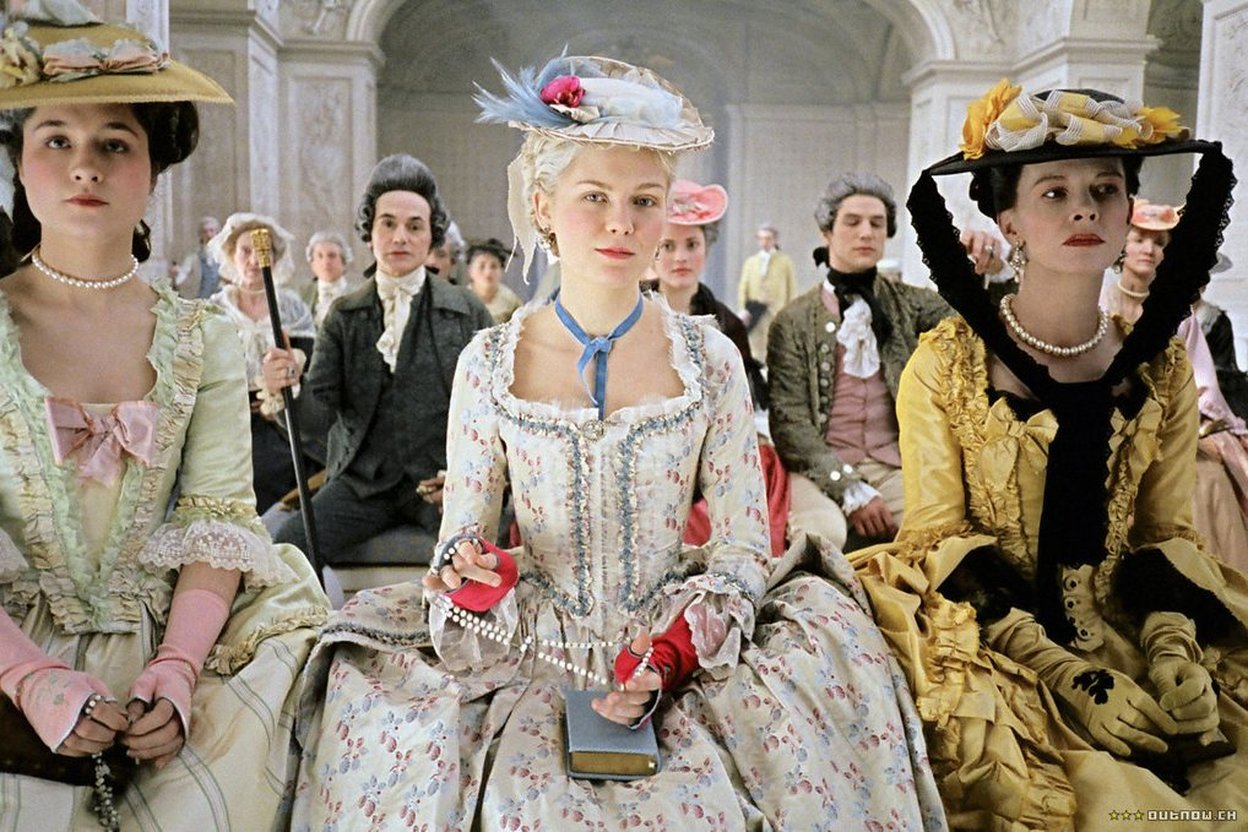
Did Marie Antoinette really say let them eat cake?
Marie Antoinette almost certainly never said 'let them eat cake.' Here's where the line came from, how it got pinned on her, and why it stuck.
Every October, the Halloween costume aisles bring her back: the towering powdered wig, the big silk skirts, and usually a joke about cake. You've probably heard "let them eat cake" used as shorthand for a rich person who doesn't understand how anyone else lives. The short answer is no. There is no reliable evidence that Marie Antoinette ever said it. The line first shows up in a book written while she was a child in Austria, and it wasn't pinned on her in print until decades after her death.
The short answer
Historians treat the attribution as unsupported. Nothing from her lifetime records her saying "let them eat cake," or the French original, "Qu'ils mangent de la brioche." That includes her letters, court records, and reports from people who were there. Even the pamphlets that attacked her during the Revolution, which accused her of almost everything, don't contain it.
The timeline is the strongest evidence against the story. The best-known early version of the anecdote appears in Jean-Jacques Rousseau's autobiography, the Confessions, in a section written in the mid-1760s. Marie Antoinette was born in Vienna in 1755 and didn't arrive in France until 1770, so when Rousseau wrote the passage, she was a child living at the Austrian court.
The first time the line was tied to her in print came in 1843, about 50 years after she was guillotined in 1793. The rest of this article covers where the line came from, how it ended up attached to her, and why so many people were ready to believe it.
Where the line really comes from
The passage is in Book VI of Rousseau's Confessions. Rousseau recalls a "great princess" who was told that the peasants had no bread and answered: "Then let them eat brioches."
Rousseau never says who the princess was. He may not have been thinking of a real person at all. Historians allow that he could have made up the anecdote or reworked a story that was already going around. Either way, the passage gives no name.
The date is slightly uncertain. Sources say the first six books of the Confessions were written in 1765, while others give 1767 or 1769. Wikipedia's own article gives more than one date. The safe summary is "mid-to-late 1760s," and every one of those dates falls years before Marie Antoinette came to France. The book itself was published in 1782, after she had become queen. That may explain why later readers assumed the "great princess" was her. By 1782 she was the obvious candidate.
The food matters too. The French word is brioche, not cake. Brioche is bread enriched with butter and eggs, which made it a luxury compared with the plain loaves most people lived on. (It's also the soft, golden bread that some families now use for Thanksgiving stuffing.) "Cake" is a loose English translation. It makes the line sharper in English, but the original point was the same: the speaker suggests a richer kind of bread to people who can't afford ordinary bread.
How it got pinned on her
The link to Marie Antoinette appeared in March 1843, when the French writer Alphonse Karr attributed the line to her in his satirical journal Les Guêpes ("The Wasps"). Karr claimed he had seen the phrase in a book dated 1760. If that book existed, it would be further proof that the line was older than her time in France. A volume from 1841 had already printed a slightly different version, "S'il n'y a pas de pain on mangera de la brioche" ("If there is no bread, they will eat brioche").
The royal family had its own account of where the line came from. The biographer Antonia Fraser cites the memoirs of Louis XVIII, Marie Antoinette's brother-in-law. According to those memoirs, the family believed the remark started with Maria Theresa of Spain, the wife of Louis XIV, about a century earlier. Louis XVIII called it "an old legend" and didn't connect it to Marie Antoinette.
Other women have been named as the speaker too. Some versions credit Louis XV's daughters, Madame Sophie and Madame Victoire, although that attribution is poorly documented. Alexandre Dumas gave the line to the Duchess of Polignac, one of Marie Antoinette's close friends, in his 1853 novel Ange Pitou.
The basic idea is much older than France. The 7th-century Chinese history Book of Jin tells a similar story about Emperor Hui of Western Jin. When he was told his people had no rice, he asked why they didn't eat porridge with meat. Stories like this seem to attach themselves to whichever ruler looks most out of touch at the time.
Why it was believable
The line spread because it hit the issue French families cared about most. Bread was the staple food of the peasantry and the working class. Fraser estimates that it took about half of a worker's income. When the price of bread went up, people went hungry, so joking about bread shortages was a serious insult.
Marie Antoinette was queen during several shortages. In April and May of 1775, months after she became queen, rising grain prices set off riots known as the Flour War. Bread was scarce again in 1788, just before the Revolution. A queen who supposedly mocked hungry people matched what many of them were going through.
Her reputation made the story easy to accept. Critics called her "Madame Déficit" and blamed her spending for the kingdom's money problems. The Affair of the Diamond Necklace, a fraud built around an extremely expensive necklace, damaged her name badly even though she never wore it in public. She was also an Austrian princess married into a country that had long distrusted Austria, so many people saw her as an outsider from the start.
Some historians think the hostility went beyond politics. Robert Gildea argues that sexism played a part, because the Revolution "tried to exclude women from political power." A powerful, foreign, famously fashionable woman was an easy target for a line like this.
What she actually said and did
The record from her own hand points in a different direction. During the 1775 shortage she wrote to her family about the French people, saying that "we are more obliged than ever to work hard for their happiness." That isn't how someone who shrugs off hunger usually writes.
Fraser describes her as a generous patron of charity who was "moved by the plight of the poor when it was brought to her attention." The last part of that quote is worth noticing. It suggests real sympathy, but also a life far removed from the poverty around her.
The full picture is more mixed than either the myth or the defense. She spent lavishly, she was deeply unpopular, and some of the accounts that make her look kind come from sympathetic biographers. None of that makes the cake line true, but it does explain why it was easy to believe. She was tried on October 14, 1793, and guillotined two days later, at 37.
Bottom line
Marie Antoinette almost certainly never said "let them eat cake." The line comes from an unnamed "great princess" in Rousseau's Confessions, written while she was a child in Vienna. Earlier versions were credited to Maria Theresa of Spain, and others to Louis XV's daughters and the Duchess of Polignac. It was first tied to her in print in 1843, and the attribution stuck because of bread shortages, her spending, and long-standing hostility toward a foreign-born queen. The same story has been told about rulers as far back as a Chinese emperor, which suggests the line says more about how people see the powerful than about any one person.
Sources (5)
Photo: marie antoinette by orionpozo, BY 2.0.