Is Halloween Really Samhain? What the Old Irish Festival Was, and What It Wasn't
Learn the real history of Samhain and Halloween, what connects them, and why the popular story has gaps.
Every October someone repeats the line, maybe while you're picking out a pumpkin: "Halloween is really Samhain, the old Celtic festival of the dead." It's half true. Samhain was a real Irish festival, and it shares a date with Halloween. Halloween itself grew out of a Christian feast and was later reshaped in America. The two overlap, but they are not the same holiday, and historians disagree about how closely they're connected. Here is what can be said with confidence and where the popular story has gaps.
The short answer
Samhain (pronounced "SOW-in") was a seasonal festival in early Ireland. Modern Pagans and Wiccans still keep it as a holiday today. Halloween takes its name from "All Hallows' Eve," the evening before All Saints' Day on November 1. Its roots are in the Christian calendar, and most of the customs people now think of as Halloween, such as jack-o'-lanterns, costumes and trick-or-treating, took their familiar shape in North America.
The two holidays share a date at the turn from October to November. They also share some themes: the end of the harvest, the coming dark and the dead. The popular account goes further and says the Church simply took over Samhain and renamed it Halloween. Several historians say the evidence doesn't support that. Their view is that the date is the strongest link, and possibly the only one.
What Samhain was
The name is usually translated as "summer's end." Samhain was one of four major festivals in the Celtic calendar, along with Imbolc, Beltane and Lughnasa, and it marked the end of the harvest and the start of winter. The festival is generally placed on November 1. According to popular histories, people believed spirits, the Aos Sí, could cross into the human world on the night of October 31.
This idea of a "thin veil" between the living and the dead is the best-known part of Samhain today. Popular accounts add bonfires, food left out for spirits, and costumes worn either to blend in with those spirits or to keep them away. You will also often see Samhain called "the Celtic new year."
These claims need care, because almost everything written about early Samhain comes from medieval Irish literature, and those texts were produced centuries after the period they describe. Historian Ronald Hutton, summarized by the folklorist Dimitra Fimi, points out that the Samhain feasts in these stories are often the setting for supernatural events. He explains this as a storytelling device. A gathering of legendary heroes "with time on their hands" is a good way to start a tale, and it doesn't prove the festival itself was about the supernatural. A USC summary of the scholarship notes that the medieval accounts describe weeklong feasts, markets and games, and that the otherworld in these stories was "a sunny place in perpetual spring." That is far from a haunted night.
The "Celtic new year" idea is also weaker than it sounds. Hutton traces it to the scholar Sir John Rhys, who based it on what Hutton calls "very flimsy" folklore evidence gathered in the late 19th and early 20th centuries, not on ancient sources.
How Halloween developed
Halloween's own history begins in Rome. In 609, Pope Boniface IV dedicated the Pantheon to Christian martyrs. During the 8th and 9th centuries, later popes widened the feast to honor all saints and fixed it on November 1. Sources differ on the exact steps and years, but Gregory III and Gregory IV are the popes usually named. All Souls' Day, a day for praying for the dead, came to sit beside it on November 2. Together with the eve before, these days are known as Allhallowtide.
The evening of October 31 became All Hallows' Eve, which was shortened to Halloween. For centuries it was a religious occasion in the British Isles. Protestant rulers in the 16th century suppressed celebrations of the saints along with some harvest customs. In colonial New England, Protestant culture largely kept Halloween from catching on.
The holiday took off in America in the 19th century, especially after Irish immigrants arrived fleeing the Potato Famine. They and other newcomers brought customs that changed in their new home. According to the USC account, Scottish "guisers," people in disguise who went door to door begging for soul cakes, became the model for costumed trick-or-treaters. Carved turnips became jack-o'-lanterns once immigrants found that pumpkins were bigger and easier to carve. Modern trick-or-treating emerged between about 1920 and 1950 as a family-friendly replacement for the pranks and vandalism that had come to mark the night.
Do historians think Halloween comes from Samhain?
The popular version goes like this. The Church wanted to convert the pagan Irish, so it placed All Saints' Day on Samhain's date to absorb the old festival. History.co.uk tells it this way, and History.com says the Church "likely" created All Souls' Day to replace Samhain.
Several historians disagree. Kyle Smith, a historian of Christianity, calls the evidence for the Samhain origin story "flimsy." He argues that Gregory IV's decision wasn't aimed at Samhain at all. It made official a date already in use across Europe and widened the feast from martyrs to all saints. In Smith's words, Allhallowtide is "perhaps the most thoroughly Christian celebration of the year, at least historically speaking."
Hutton makes a related point about geography. The November 1 date for All Saints was not established in Ireland. It came from the Germanic dioceses of northern Europe, which makes it hard to argue that the date was chosen to replace an Irish festival. His book The Stations of the Sun (1996) concludes that in the British Isles, All Saints' Day replaced whatever had been done at Samhain, and that Halloween as a distinct holiday developed after the Reformation.
The USC piece goes furthest. It says the date is the only thing linking modern Halloween to Samhain and credits the rest to English, papal and commercial influences. It also argues that 19th-century English folklorists invented the close Samhain–Halloween connection.
This is still debated. Pagan festivals and Christian feasts did influence each other over centuries, and nobody can fully reconstruct what ordinary people did on the night of October 31 in early medieval Ireland. The confident claim that "Halloween is Samhain in disguise" goes beyond the evidence.
Samhain today
Samhain didn't disappear. Wiccans and many other modern Pagans observe it as one of eight festivals on the Wheel of the Year. Four of these are solar events (the solstices and equinoxes), and the other four are seasonal celebrations. Samhain falls on October 31, followed by Yule, Imbolc, Ostara, Beltane, Litha, Lughnasadh and Mabon.
The wheel itself is modern. Jacob Grimm first suggested the idea in his 1835 work Teutonic Mythology, and the Wicca movement fixed it in its present form in the 1950s and early 1960s. World History Encyclopedia notes that "there is no evidence of an ancient Wheel of the Year in its present form," even though the individual Celtic festivals were real.
For people who keep it, Samhain usually centers on the dead, not on candy. It means remembering ancestors and sometimes setting out a favorite meal for those who have died, based on the belief that the veil between the living and the dead is thinnest at this time of year.
Samhain and Halloween, side by side
- Origin: Samhain was a festival in early Ireland. Halloween is the eve of the Christian feast of All Saints.
- Date: Samhain is traditionally November 1, with the night before as its start, and modern Pagans keep it on October 31. Halloween is October 31.
- Main sources: Samhain is known mostly from medieval Irish literature. Halloween is documented through church history and later folk and American customs.
- Themes: Samhain marks summer's end, harvest and the dead. Halloween covers saints, the dead and, in modern times, costumes and candy.
- Who keeps it today: Wiccans and other modern Pagans keep Samhain as a religious observance. Halloween is celebrated widely as a mostly secular holiday.
- Same holiday? No. They share a date and some themes, and historians disagree about how much more they share.
Sources (6)
- History.co.uk: Samhain and the Pagan Roots of Halloween
- History.com: History of Halloween
- UC Press blog: The Deep History Lurking Behind Halloween (Kyle Smith)
- USC Dornsife: Ancient Irish Get Too Much Credit for Halloween
- Dimitra Fimi: essay on Samhain and Ronald Hutton's research
- World History Encyclopedia: Wheel of the Year
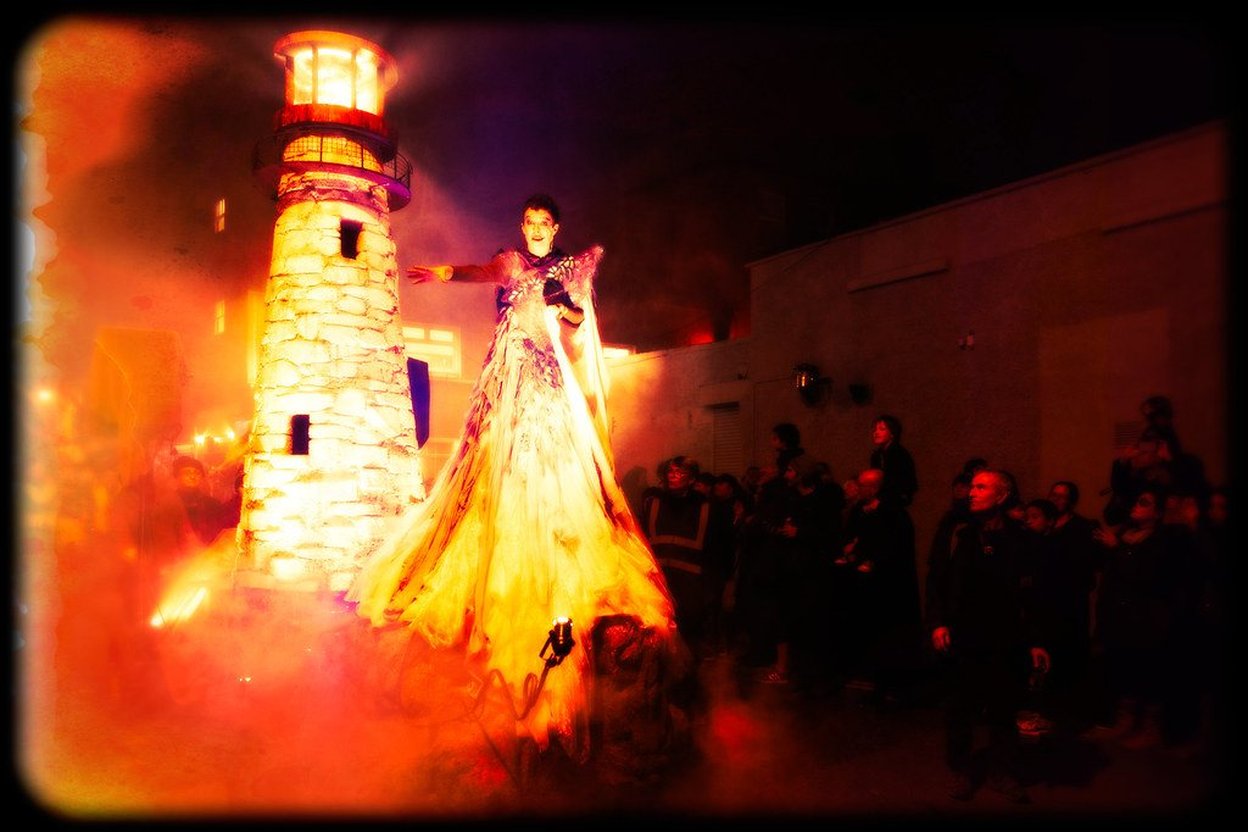
Photo: [MACNAS HALLOWEEN PARADE IN DUBLIN ON MONDAY 30 OCTOBER [BRAM STOKER FESTIVAL IN DUBLIN ]-133676](https://www.flickr.com/photos/80824546@N00/26272156029) by infomatique, BY-SA 2.0.