Hazel Eyes: What Color Are They, Really?
Hazel eyes blend brown, gold, and green. Learn why they seem to change color, how rare they are, and the genetics behind them.
You may notice your eyes look greener in daylight and browner indoors. Hazel eyes are a blend of brown, gold, and green, with an uneven mix that varies from person to person. That shifting appearance comes from how light interacts with the iris, not from a change in your mood.
Hazel is a category of eye-color appearance, not one fixed shade. Knowing that helps you make sense of why hazel eyes can be hard to label and why estimates of how common they are vary.
The short answer: what "hazel" actually is
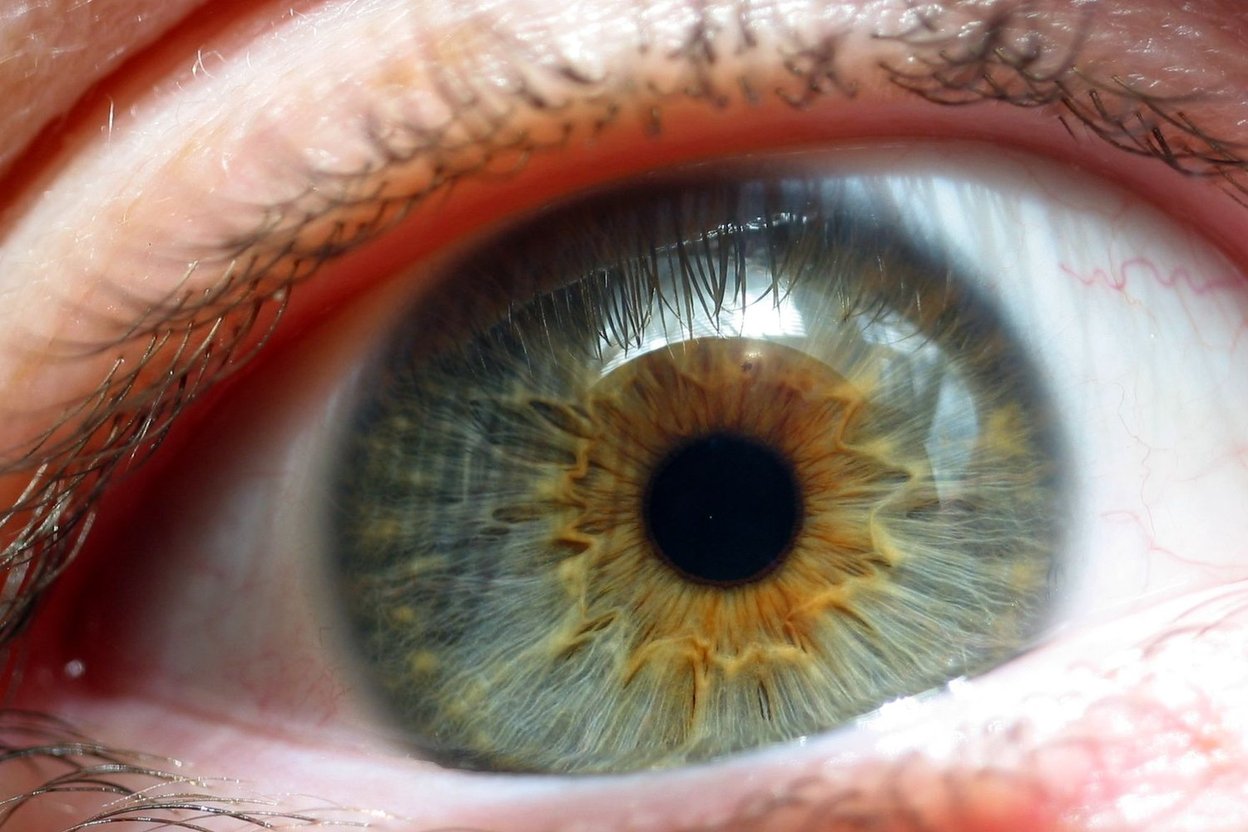
Hazel eyes combine brown, gold, and green, with the proportions arranged differently from one person to another. Some irises show more brown near the pupil with green toward the edge; others have gold or brown spread across more of the iris.
The mix reflects a moderate amount of melanin, the pigment that gives the iris its color. Hazel eyes have less melanin than brown eyes and more than blue eyes. Because the pigment and its distribution vary, two people can both have hazel eyes while their irises look noticeably different.
Hazel describes appearance rather than a single, precisely defined color. The label covers a range of combinations, which can include brown, green, and gold in varying amounts. This broad category also helps explain why hazel can be confused with green or light brown.
Why hazel eyes seem to change color
Hazel eyes seem to shift because lighting, nearby colors, and pupil size alter how their mix of pigment and scattered light appears. The iris has no green or blue pigment; brown pigment combines with light scattering in the front layer of the iris, called the stroma.
In bright daylight, the scattering and the iris’s color distribution can make green or gold tones stand out. Indoors, dimmer light can make brown areas appear more prominent. Clothing near your face also changes the contrast, so green or gold tones may appear stronger next to certain colors.
Your pupils change size in response to light, and that changes how much of the iris you see. A larger pupil leaves less iris visible; a smaller pupil exposes more of its color pattern. These ordinary visual shifts explain many reports that hazel eyes look different from one setting to another.
Mood does not directly change your iris color. Emotions can accompany changes in pupil size, and that can affect the appearance of your eyes, but it does not mean your mood has changed the pigment.
Some eye-color changes over a lifetime are real. They are rarer than shifts caused by lighting or pupil size, and a noticeable change in one eye deserves medical attention.
How rare are hazel eyes?
Hazel eyes are estimated to occur in about 5% of people worldwide, while U.S. estimates range from about 10% to 18%. Those figures are rough, and hazel counts are shaky because there is no standard definition of the color.
Brown is the most common eye color worldwide. Blue eyes are less common than brown, while green and gray are rarer still. Hazel falls between familiar categories in appearance, and the lack of a consistent boundary makes comparisons difficult.
U.S. figures vary across references, with some estimates near 10% and others closer to 18%. The worldwide figure of about 5% is also best treated as an estimate, not a precise count. Differences in classification can affect how people with mixed brown, green, and gold eyes are recorded.
For a sense of scale, the MedlinePlus Genetics overview of eye color describes the role of genes and pigment in eye color, while prevalence estimates remain difficult to compare without a shared definition of hazel.
The genetics
Hazel eye color is polygenic, meaning several genes contribute to the result. The familiar idea that brown simply overrides blue leaves out the complexity of how inherited variants combine.
OCA2 and HERC2 do much of the work in determining eye color. Dozens of other genes add smaller effects, influencing the amount and distribution of melanin in the iris. Those combined effects help produce a range of colors, including hazel.
Hazel sits in the middle of that range, where predicting an intermediate color is difficult. Parents’ eye colors can offer clues about inherited traits, but they do not establish a child’s exact eye color. The same genetic influences can produce different combinations of pigment and visible color.
Research on eye-color genetics reflects this complexity. A journal review of eye-color genetics describes the multiple genetic factors involved, supporting a model with many contributors rather than a simple dominant-color rule.
Hazel's place in the eye-color family and quick takeaways
Hazel, amber, and green describe related-looking but distinct appearances, with no official boundary that separates them. Hazel combines brown with green or gold; amber looks more uniformly golden or coppery, while green eyes show a stronger green appearance.
A color shift caused by lighting or pupil size is expected. Arrange a doctor’s visit for a clear, lasting change, especially if it affects only one eye.
- Hazel is a variable blend of brown, gold, and green.
- Its appearance shifts with light, nearby colors, and pupil size.
- Estimates put hazel eyes near 5% worldwide, with U.S. figures varying.
- Eye color involves multiple genes, especially OCA2 and HERC2.
Sources (2)
Photo: Close-up of the iris of the eye by Chad Miller, CC BY-SA 2.0.