Are Violet Eyes a Real Eye Color?
Violet isn't a recognized eye color. Learn why some eyes look purple, what the Elizabeth Taylor claim gets wrong, and why the myths persist.
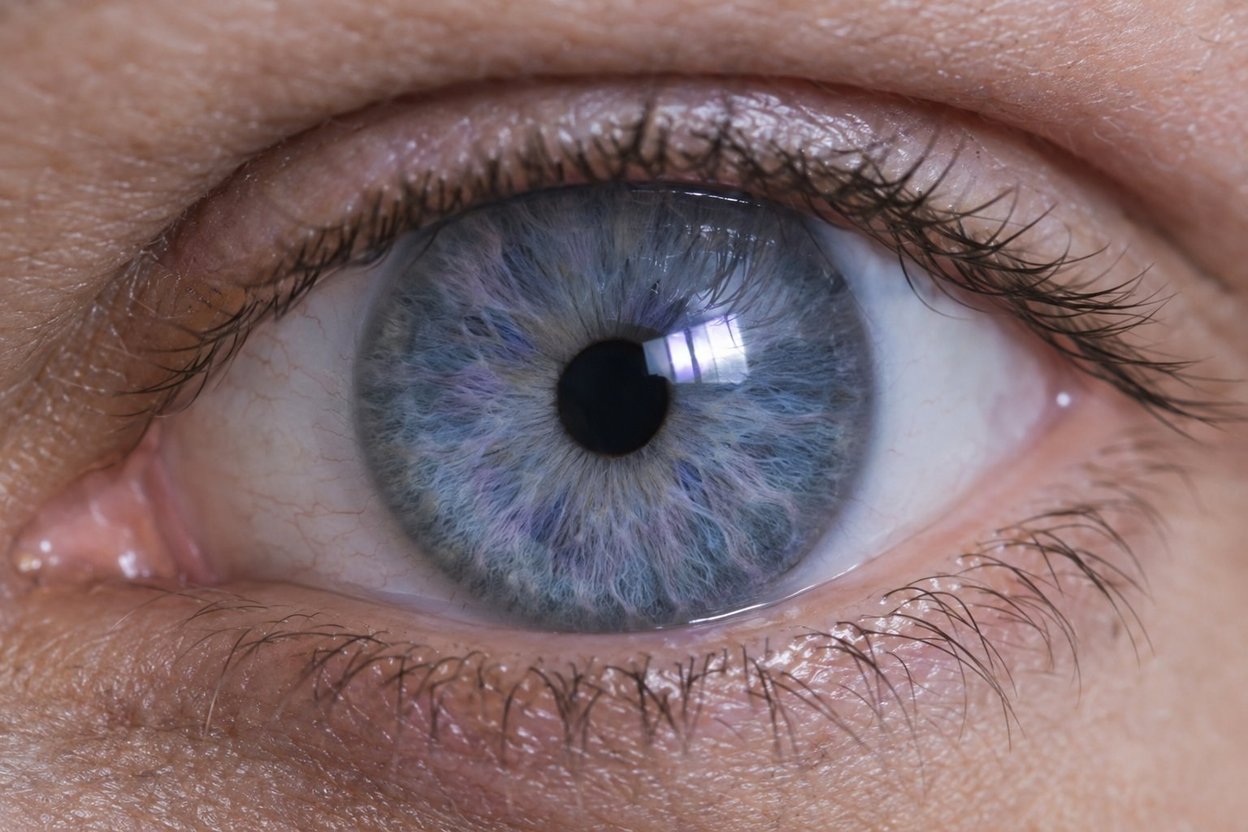
You may have seen eyes that look purple in a photograph or heard that Elizabeth Taylor was born with violet eyes. Violet is not a recognized eye color, though very rare, low-pigment eyes can appear violet in some lighting.
The difference comes down to how pigment and light affect the iris. That also helps explain why famous claims and online stories about purple eyes can sound convincing while remaining myths.
The short answer
Violet is not a recognized eye color. A few very rare, low-pigment eyes can look violet in certain light, but the appearance is usually a variation of blue or a visual effect.
The story that people are “born with purple eyes” is a myth. Violet eyes do not form a separate, established category alongside blue, brown, green, or hazel. When someone’s eyes seem purple, lighting, low iris pigment, or colored contact lenses can account for the look.
Photographs can make the effect more noticeable. The light source, surrounding colors, and image processing can shift how blue or pale eyes appear, so a violet-looking photo does not establish that someone has a distinct purple eye color.
That distinction explains why the question keeps coming up: an eye can look violet without violet being a recognized natural eye-color category. The biology of iris color clarifies how that appearance happens.
Why eyes have the colors they do
Melanin in your iris sets your eye color. The amount and distribution of this pigment influence whether your eyes look brown, hazel, green, or blue.
Blue eyes contain no blue pigment. Their appearance comes from light scattering in the iris, a phenomenon similar to why the sky looks blue. The amount of melanin and the way light interacts with the iris produce the visible color.
When eyes appear violet, the effect is associated with blue or low-pigment eyes. A small amount of pigment can leave the iris looking pale, while lighting changes how that color reads. Photographs and surrounding colors can also influence what you see.
This is why “violet” can describe an appearance without identifying a separate eye color. The visible shade reflects the interaction between iris pigment and light, not purple pigment in the eye.
Elizabeth Taylor and the violet-eye legend
Elizabeth Taylor’s eyes looked violet in some shots and dark blue in others, leaving her eye color open to interpretation. Lighting, makeup, and wardrobe changed how the shade appeared on screen and in photographs.
Taylor’s estate said she never wore contact lenses, though it did not name her eye color. Snopes rated the claim that her eyes were naturally violet as “Unproven” and leaned toward very dark blue. The available accounts do not settle whether her eyes were violet.
Her eyelashes also became part of the story. Taylor had distichiasis, a condition involving a double row of lashes. It is an interesting detail about her appearance, though it does not prove that her eyes were violet.
When you see a photo described as showing Taylor’s “violet eyes,” the image captures how her eyes looked under those conditions. Other shots show a darker blue. Her estate’s statement about contacts addresses one detail, but it does not resolve the color debate.
When eyes can look violet or red
Albinism can make eyes appear reddish or violet because the iris contains little pigment, allowing light and blood vessels at the back of the eye to show through. The appearance varies with the person and the lighting.
Most people with albinism have blue, hazel, or brown eyes. Violet or red-looking eyes are rare appearances, not the usual eye color associated with albinism. A low-pigment iris may look different under different light sources, which can also affect how it appears in a photograph.
Colored contact lenses offer another explanation for violet-looking eyes. They can change the visible color of the iris, producing a shade that does not reflect the wearer’s natural eye color.
A violet-looking eye therefore does not point to one cause on its own. Low pigment, lighting, and colored lenses can all affect the appearance.
The Alexandria's Genesis myth
Alexandria’s Genesis is not a real disease. It began as an invented fanfiction story in the early 2000s and later spread online as though it described a medical condition.
The story links supposed purple eyes to unusual traits and claims about human biology. Those details belong to fiction, not a recognized disease. A violet appearance in someone’s eyes has no connection to Alexandria’s Genesis.
The myth gained traction because it combines a striking claim with familiar internet folklore about rare traits. Its use of medical-sounding language can make it seem factual, but the name refers to an invented story.
If you encounter the term presented as a diagnosis, treat it as fiction. It does not explain eye color or provide a medical reason for violet-looking eyes.
What the real rare colors are
Green is the rarest of the main eye colors in a U.S. survey, at about 2%. The “other” category made up about 1%, a small group that does not establish violet as a standard eye color.
Eye-color labels describe visible shades, and a violet appearance can come from lighting or low pigment. That makes a photograph or a one-time color impression a poor basis for deciding whether your eye color has changed.
If your eyes seem to change color, an eye doctor can examine them and tell you whether the shift reflects lighting or another change in your eyes.