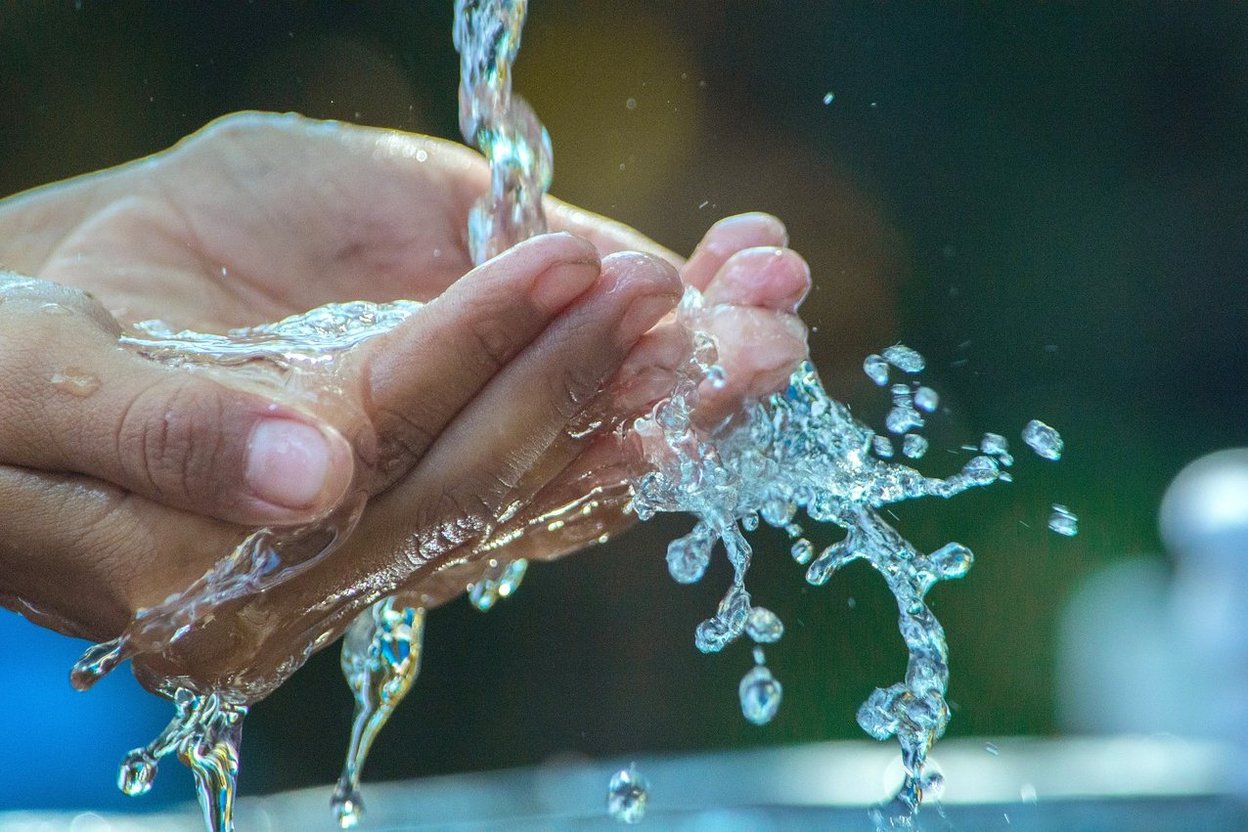
Why Do Your Fingertips Prune in Water? It's Your Nerves, Not the Soaking
Pruney fingertips come from nerves tightening blood vessels, not from water soaking in. See what the science says about whether the wrinkles help grip.
You finish scrubbing the roasting pan after Thanksgiving dinner, or you climb out of a long bath, and your fingertips have gone ridged and puckered. Most people assume the skin has soaked up water like a sponge. That isn't what happens. Pruney fingers are an active response controlled by your nervous system, which squeezes the tiny blood vessels under your fingertips until the skin folds. Why the body does this is still an open question. Scientists have spent more than a decade arguing over whether those wrinkles help you grip wet things.
The short answer
When your hands stay in water long enough, the blood vessels just below the skin of your fingertips narrow. This is called vasoconstriction. Science News puts it simply: the wrinkling "is actually caused by the nervous system constricting blood vessels." Scientific American describes it the same way, as an active process run by the nervous system and not simple osmosis.
According to The Scientist, the narrowing vessels create negative pressure that pulls the outer layer of skin downward. The skin is anchored to the tissue beneath it unevenly, so it doesn't sink in evenly. It buckles into the familiar pattern of ridges and valleys. The Scientist also points to a 2003 paper in the journal Muscle & Nerve, by Einar Wilder-Smith and colleagues, that tied the wrinkling to this drop in blood flow.
The title of this article is a little loose. What wrinkles is the soft pad of the fingertip, which folds into large creases. The fine lines that make up your fingerprint are a separate, much smaller pattern on the skin's surface, and they don't get rewritten when your fingers prune.
It's not just water soaking in
For a long time, the common explanation was osmosis: water seeps into the dead outer skin cells, they swell, and the swollen skin has nowhere to go but up into folds. It sounds reasonable, but it doesn't match what researchers see. Asked about the osmosis idea, Wilder-Smith told The Scientist: "in fact, it's the opposite." The skin is being pulled down from below, not pushed up from swelling.
The pattern of where wrinkles appear is another clue. If skin just soaked up water, your arms, legs and belly would pucker in the bath too. They don't. "The whole body doesn't wrinkle," Wilder-Smith pointed out. Wrinkling stays on the fingers and toes because the outer skin there has a dense supply of nerves and is tied closely to the blood vessels underneath.
The strongest evidence comes from people whose nerves don't work. Patients with nerve damage in the hand did not wrinkle in the affected fingers, The Scientist reports. The water still reached their skin, but without working nerves to signal the blood vessels, nothing happened.
The nerve test doctors use
The link between nerves and pruning isn't new. Research from the mid-1930s found that a finger stops wrinkling in water when its nerves are cut, according to National Geographic and Science News.
That observation turned into a practical tool in the 1970s. The Scientist tells the story: a mother noticed that her child's fingers had stopped shriveling in water after nerve repair. That gave hand surgeon Seamus O'Riain the idea for a simple test. Soak the fingertips and see which ones wrinkle. A finger that stays smooth suggests its nerve supply isn't working. The test needs no equipment beyond a bowl of water, and it is still in use. It can be especially helpful with patients who can't easily describe what they feel, such as young children.
The "rain tread" idea
If the body goes out of its way to wrinkle fingertips, it seems fair to ask why. In 2011, a team led by Mark Changizi proposed an answer, reported by Ed Yong in National Geographic and by Scientific American. Their idea was that pruney fingers work like the rain treads on a tire. The grooves give water a path to drain away, so more skin makes direct contact with a wet surface. On that view, wrinkling would be a wet-weather setting that switches on only when needed. Changizi suggested the adaptation probably applies to other primates as well.
It was a neat hypothesis, but a hypothesis needs a test. In January 2013, Kyriacos Kareklas, Daniel Nettle and Tom Smulders of Newcastle University published one in Biology Letters, titled "Water-induced finger wrinkles improve handling of wet objects."
Twenty volunteers soaked their fingers in warm water for 30 minutes. Then they moved glass marbles and fishing weights from one container to another. According to Science News, every participant moved wet objects faster with wrinkled fingers. With dry objects, wrinkled fingers gave no advantage. That is the pattern the rain-tread idea predicts: help when things are wet, no difference when they are dry.
The study didn't show how the wrinkles helped, though. Science News noted that the advantage could come from changes in friction, flexibility, stickiness or oiliness of the skin, not necessarily from water draining through grooves. The experiment also used only 20 people. It suggested a benefit without explaining it.
Do wrinkles really help grip? Scientists disagree
A year later, a team in Berlin tested the idea again and got a different answer. In a January 8, 2014 study in PLOS ONE, Julia Haseleu, Gary Lewin and colleagues at the Max Delbrück Center tested 40 people. They found that wrinkled fingers did not improve handling of wet objects. They also found no effect on how finely people could feel textures or sense vibration. In the Max Delbrück Center's account, the team could not reproduce the Newcastle result.
That left two small lab studies with opposite conclusions. Each tested a few dozen people. Neither identified a physical mechanism that would explain its result.
In 2021, Nick J. Davis of Manchester Metropolitan University took a different approach. Instead of timing how fast people moved objects, he measured grip force: how hard someone squeezes an object compared with the force needed to keep it from slipping. A lower ratio means a more efficient grip. His study, published July 21, 2021 in PLOS ONE, analyzed 516 people: 231 with dry fingers, 74 with wet smooth fingers and 211 with wrinkly fingers.
The results:
- Wet smooth fingers needed a higher grip-to-load ratio than dry fingers (p<0.0001).
- Wet smooth fingers also needed a higher ratio than wrinkled fingers (p=0.0026).
- Wrinkled fingers were not significantly different from dry ones (p=0.0667).
In other words, wrinkling seemed to bring wet fingers back close to dry performance. Davis concluded that "wrinkly fingers reduce the grip force needed to grip a wet object."
The study had its own weaknesses, and Davis listed them. The data were collected at a public science museum, not in a controlled lab. Participants chose which group to join. They weren't blind to the conditions. Their average age was 17.7, so the sample skewed young. Davis also called the link to primate evolution speculative.
The current scorecard is two studies that found a benefit, one that found none, and no study that settles the question.
What we still don't know
The biggest gap is the trigger itself. Researchers know the nerves tighten the blood vessels, but not how water sets that off in the first place. Wilder-Smith has said he suspects water selectively stimulates electrolyte channels in the skin, but that remains a hunch. Davis's 2021 study didn't help on this point, because it measured grip and not blood flow. Its participants wrinkled their fingers in a 30°C bath.
Whether wrinkling is an evolutionary adaptation is also unproven. If wrinkles really improve grip, it's odd that fingertips aren't wrinkled all the time. One possibility is that permanent wrinkles would come at a cost, such as snagging on things or dulling the sense of touch. As of the 2013 coverage in Science News, nobody had tested those costs.
Finally, some people notice fingertips that stay wrinkled even when dry. According to The Scientist, this may be linked to reduced circulation, from causes such as dehydration or Raynaud's disease. That's a separate situation from bath-time pruning, and it hasn't been studied as much.
So when you finish the Thanksgiving dishes with puckered fingertips, what you're seeing is your nervous system at work. Scientists are still debating what that response is for.
Sources (7)
- The Scientist: The Science Behind Pruney Fingers
- Science News: Pruney digits help people get a grip
- Scientific American: Wrinkled Fingers Are Not Slippery When Wet
- Scientific American: Water-Logged Prune Fingers Grip Better
- National Geographic: What is the point of pruney fingers?
- Max Delbrück Center Berlin: Wrinkled fingers study (Haseleu et al., PLOS ONE 2014)
- Davis, N. J. (2021), PLOS ONE 16(7): e0253185, via PMC
Photo by drfuenteshernandez on Pixabay.