Halloween is on a Saturday this year. When is the next Saturday Halloween?
Halloween stays on Oct. 31, but its weekday shifts. Find out when it next falls on a Saturday (2037) and why the gaps vary.
You know Halloween falls on the same date every year, yet the weekday can change the feel of the celebration. The next Saturday Halloween after 2026 is Oct. 31, 2037, 11 years away.
Halloween stays on Oct. 31; the calendar determines which weekday you get. That shift also explains why Saturday Halloweens arrive at uneven intervals.
The short answer: 2037
The next Saturday Halloween after Saturday, Oct. 31, 2026, is Saturday, Oct. 31, 2037. You will wait 11 years for it.
Halloween’s date never changes: it falls on Oct. 31 every year. The weekday moves forward as the calendar advances, with leap years changing that movement. As a result, a Saturday Halloween does not arrive on a fixed cycle.
The 2026 date gives you a Saturday for trick-or-treating, parties, or other plans. After that, the next time Oct. 31 lands on a Saturday is 2037.
Every Saturday Halloween, past and future
The listed Saturday Halloweens run from 2009 through 2054, with the longest gap between 2026 and 2037.
- 2009
- 2015
- 2020
- 2026
- 2037
- 2043
- 2048
- 2054
The intervals vary: 2009 to 2015 is six years, 2015 to 2020 is five, and 2020 to 2026 is six. Then comes the longest gap in the list, 11 years from 2026 to 2037.
After 2037, Saturday Halloween returns six years later in 2043, then five years later in 2048 and six years later in 2054. Those changing intervals follow the way weekdays shift across ordinary years and leap years.
Why the gaps jump around: blame leap years
A fixed date advances by one weekday in most years and by two weekdays after a leap day.
For Halloween, that means Oct. 31 moves forward one weekday from one year to the next in a standard year. When a leap day falls between two Halloweens, the date shifts forward two weekdays across that interval.
The 2027-to-2028 change shows the effect. Halloween falls on Sunday in 2027, then Tuesday in 2028. Monday is skipped because the calendar includes leap day in 2028.
That pattern produces Saturday Halloweens at intervals of five, six, or 11 years. A run of weekday shifts can bring Oct. 31 back to Saturday after five or six years; other sequences push the wait to 11. The weekday is determined by the calendar, while Halloween itself remains fixed on Oct. 31.
What day Halloween falls on, 2027 to 2032
From 2027 through 2032, Halloween falls on Sunday, Tuesday, Wednesday, Thursday, Friday, then Sunday.
- 2027: weekday Sunday
- 2028: weekday Tuesday
- 2029: weekday Wednesday
- 2030: weekday Thursday
- 2031: weekday Friday
- 2032: weekday Sunday
There is no Saturday Halloween in this run. You get two Sundays, in 2027 and 2032, and a Friday Halloween in 2031. The skipped Monday in 2028 reflects the two-weekday shift after leap day.
The last one: Saturday, Oct. 31, 2020, with a blue moon
The previous Saturday Halloween was Oct. 31, 2020, and that night’s full moon was a blue moon.
October 2020 had two full moons: one on Oct. 1 and a second on Oct. 31. A second full moon in the same calendar month is called a blue moon. You can check the October dates in the U.S. Naval Observatory’s phase data for Oct. 1 and its phase data for Oct. 24. NASA’s Halloween full moon explainer and Scientific Visualization Studio feature also describe the 2020 Halloween moon.
Halloween full moons occur about every 19 years on average. The next one is in 2039. In 2026, Halloween does not fall on a full moon.
Why a Saturday Halloween matters to people
A Saturday date gives you a weekend Halloween, and some advocates have wanted the holiday moved permanently to a Saturday.
In 2018, the Halloween & Costume Association launched a petition calling for Halloween to move to the last Saturday of October. In 2019, the group shifted to promoting a “National Trick or Treat Day” while keeping Halloween on Oct. 31.
The National Retail Federation’s 2026 survey says 74% of people plan to celebrate Halloween, with expected spending of $13.5 billion. The NRF survey release reports those figures, but its numbers are not broken out by weekday. They describe Halloween plans and spending for the year, not a specific effect from a Saturday date.
You also get an extra hour of sleep after the 2026 celebration: clocks fall back at 2 a.m. the next morning, Sunday, Nov. 1.
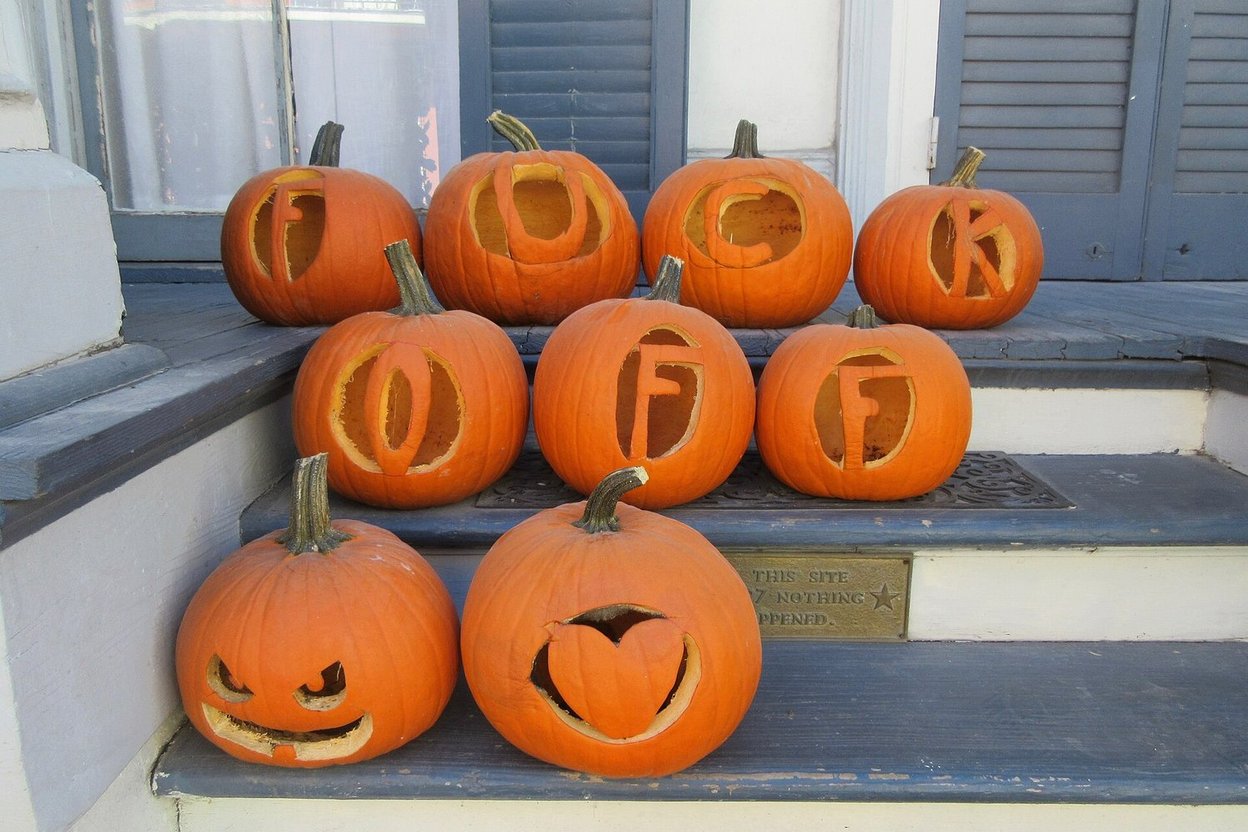
Photo: Hostile (mostly) pumpkins, Dumaine Street, New Orleans 2025 by Infrogmation, CC BY-SA 4.0.