How much are Americans spending on Halloween in 2026?
NRF projects Americans will spend $13.5 billion on Halloween in 2026, about $115 per person, with costume, decoration, and candy breakdowns.
When you add up a costume, candy and decorations, Halloween spending can climb quickly. Americans are projected to spend $13.5 billion on Halloween in 2026, or about $115.14 per person. That figure comes from a survey of planned spending, so it is a forecast, not a count of sales.
The answer: about $13.5 billion
The National Retail Federation (NRF) projects that Americans will spend $13.5 billion on Halloween in 2026, equal to $115.14 per person. NRF’s annual survey, conducted by Prosper Insights & Analytics and released Sept. 22, is based on responses from 7,889 consumers surveyed Sept. 1–9. Its margin of error is ±1.1 percentage points.
The total reflects what consumers say they plan to spend. It is not a tally of completed purchases or actual sales, which means the final amount spent could differ from the projection.
The per-person estimate helps put the headline figure in context: NRF’s projected average is about $115 for each person. Your own spending will depend on what you buy and whether you celebrate, while the national total combines plans across millions of consumers.
Where the money goes
Costumes, decorations and candy account for most projected Halloween spending, with candy the item most shoppers expect to buy. NRF estimates $4.4 billion for costumes, $4.3 billion for decorations and $4.1 billion for candy.
About 71% of shoppers plan to buy a costume. The $4.4 billion costume total includes $2 billion for adult costumes, $1.5 billion for children’s costumes and $0.92 billion for pet costumes. That puts pet costumes close to a billion dollars in planned spending.
Decorations reach the widest audience after candy: 78% of shoppers plan to buy them. Candy leads in participation, with 96% planning to purchase it. Greeting cards account for a smaller $0.8 billion, with 42% of shoppers planning to buy them, up from 38% in 2025.
The listed category estimates add up to $13.6 billion, slightly above NRF’s $13.5 billion overall projection. The gap reflects rounding in the published figures.
Is it a record?
NRF’s 2026 projection is higher in dollars than any of its previous Halloween spending forecasts, while spending per person is nearly unchanged from 2025. The per-person estimate rises from $114.45 last year to $115.14 this year.
NRF projected $13.1 billion in 2025, setting the previous record and surpassing the $12.2 billion projected for 2023. The 2024 estimate was $11.6 billion. Against that history, $13.5 billion is the highest dollar figure in the series.
NRF describes the 2026 projection as maintaining last year’s level rather than calling it a new record. Some trade outlets do label it a record, focusing on the larger national total. The distinction comes down to how the comparison is framed: total spending is up, while the amount projected per person is almost flat.
All of these figures are survey forecasts of planned spending. They describe what consumers expect to spend, not verified Halloween sales.
Who's celebrating and where they shop
NRF reports that 74% of consumers plan to celebrate Halloween in 2026, up from 73% in 2025 and 68% in 2019. The most popular planned activity is handing out candy, at 61%; 50% plan to wear a costume.
Decorating, carving pumpkins and watching scary movies are each planned by 42% of consumers. Those activities show that participation includes more than shopping, even though the spending estimate centers on planned purchases.
Discount stores are the most popular place to shop, named by 39% of shoppers. Specialty Halloween or costume stores follow at 32%, while 27% plan to shop online. Local and small businesses draw 13%, up from 7% in 2016.
Shopping starts well before October for many consumers: 49% plan to begin in September or earlier, compared with 34% in 2016. If you’re budgeting for the holiday, that early start is a useful reminder to account for Halloween purchases before the month begins.
Prices and tariffs
Most shoppers expect tariffs to raise Halloween prices: 79% say tariffs will push costs up. If prices run high, 31% plan to comparison-shop, 26% expect to look for coupons or sales, and 34% say they will buy items they can reuse.
Candy prices add another pressure point. USDA data shows prices for sugar and sweets rose 6.1% from August 2025 to August 2026, driven mainly by candy and gum. The USDA’s Food Price Outlook forecasts a 6.6% rise for the category over the full year.
Those figures describe the broader sugar-and-sweets category, not the price of a specific Halloween candy bag. For your budget, the survey’s planned responses offer a practical guide: compare prices, check for sales and consider decorations or costumes you can use again.
A second opinion, and why the numbers differ
Deloitte’s separate survey puts planned Halloween spending at an average of $285 per household, including $219 on retail and $66 on experiences. The survey of 1,500 households, conducted Aug. 18–26, also finds that 92% plan at least one Halloween activity, 34% expect to spend more than in 2025 and 71% say they can comfortably afford their plans.
Epsilon estimates typical spending at $270. Numerator finds that 85% of consumers expect rising prices to affect their Halloween shopping.
These figures are not direct substitutes for NRF’s $115.14 per person. Deloitte reports spending per household and includes experiences, while NRF gives a per-person estimate focused on Halloween purchases. Household totals also cover more than one person, so the measures use different units.
Survey results also reflect differences in questions and definitions, including whether dining and events count as spending. When you compare estimates, check the unit and what the spending total includes before treating the numbers as competing answers.
Sources (1)
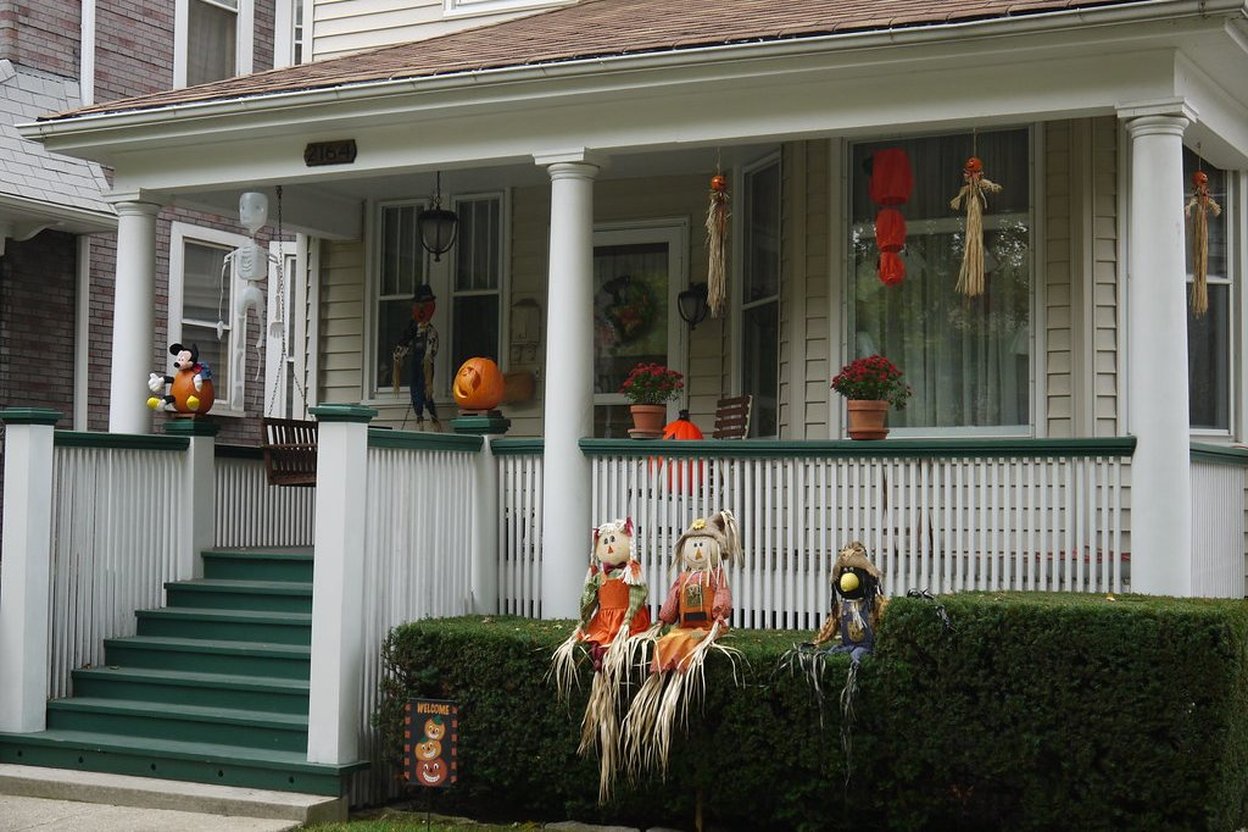
Photo: Lincoln Square Halloween by LincolnSquareInsider, BY 2.0.