Who Was the First Black Comedian to Have a Network Television Special?
Cosby's 1968 NBC special is the earliest on record, but Flip Wilson's 1970 hit show made him TV's first Black superstar.
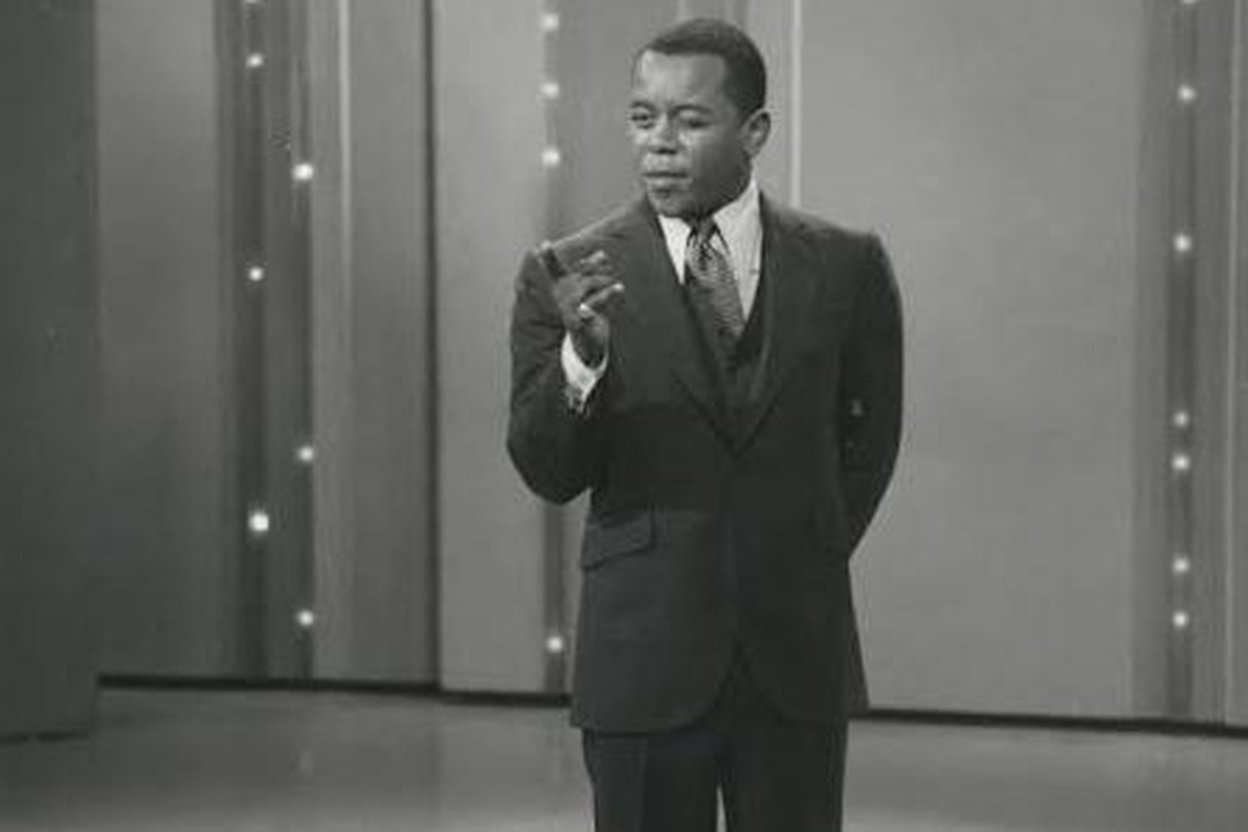
You're at a family dinner this fall and the old TV talk starts. Someone says Flip Wilson was the first Black comedian with his own network special. Someone else says it was Bill Cosby. Both have a case, and neither is a clean answer. Bill Cosby's NBC special on March 18, 1968 is the earliest one that can be dated. Flip Wilson came later but became the first Black comedian to turn network TV into a lasting hit. Which name is "first" depends on what you count.
The short answer, and why it's messy
No standard reference names one undisputed first Black comedian with a network television special. The answer changes depending on what counts as a "special." It could mean a one-off variety hour with a comedian as host, a stand-up showcase, or a pilot that led to a series.
Here is what holds up:
- Bill Cosby has the earliest special that can be dated. The Paley Center for Media lists "The Bill Cosby Show (his first special; March 18, 1968)" on NBC. It was one of four variety specials in his NBC contract.
- Flip Wilson has the best-documented claim to a different first. He is widely called the first Black entertainer to host a successful network variety series, and that series grew out of a 1969 NBC special.
So Cosby probably wins on "special" and Wilson wins on "success." There is a caveat worth stating plainly. Television archives from the 1950s and 1960s have gaps, and comedians such as Moms Mabley, Redd Foxx, Nipsey Russell, Godfrey Cambridge and Dick Gregory were all working in those years. An earlier special by one of them can't be ruled out. Until an archive shows one, the 1968 Cosby date is the earliest on record, not a proven first.
The question gets easier to follow once you see who came before the specials, and what kind of first each of them was.
Before the specials: early Black performers on TV
Black entertainers were on television long before anyone had a comedy special. Each of these was a first, just not the one in the title:
- Ethel Waters, 1939. On June 14, 1939, Waters hosted a one-time NBC variety show. She may have been the first Black person to appear on television at all. TV was barely a mass medium then, and the show was a variety program, not a comedy special.
- Sugar Hill Times, 1949. First titled Uptown Jubilee, this all-Black variety show ran on CBS from September 13 to October 20, 1949. Willie Bryant hosted, and the comedian Timmie Rogers starred. (BlackPast gives 1948 for the show, which doesn't match the 1949 broadcast dates.) It was a short-lived series with a comedian in it, not a comedian's own special.
- The Nat King Cole Show, 1956. Premiering November 5, 1956, Cole's NBC program was the first nationally broadcast show hosted by an African American. It never found a national sponsor, struggled to get affiliate stations to carry it, and went off the air at the end of 1957 after 64 episodes. Cole was a singer, not a comedian.
- Dick Gregory, 1961. Black comics had performed on Jack Paar's Tonight Show before. But in 1961 Gregory became the first Black comic invited to sit on the couch and talk with Paar after his set. Gregory later said his pay went from $250 to $5,000 a night. That figure is his own recollection.
Each of these opened a door. A network still had to hand a Black comedian an entire hour of his own.
Bill Cosby's 1968 NBC special
By 1968 Bill Cosby was one of the best-selling comedy recording artists in the country, and he was starring on NBC in I Spy. NBC signed him to a large contract that included four variety specials and a new series to follow I Spy.
According to the Paley Center, the first special aired on March 18, 1968. In it Cosby returned to his old neighborhood and told the story of his tonsillectomy, one of his best-known routines. The Paley Center says the first two specials skipped big guest stars and the usual sketches. They mostly let Cosby do his long storytelling monologues. That made them closer to a modern stand-up special than to a typical 1960s variety hour.
The specials were well received in the industry. The Television Academy lists The Bill Cosby Special on NBC as winner of the Emmy for Outstanding Variety or Musical Program for 1969. The listing doesn't say which special in the series it covers. A "Second Bill Cosby Special" appears in listings for 1969. Don't confuse these with The Bill Cosby Show, his NBC sitcom from 1969 to 1971, which was a separate project.
Cosby's place in this history is complicated today. His reputation collapsed after many sexual assault accusations were made against him. He was convicted in 2018, and the conviction was overturned in 2021. That doesn't change the broadcast record, but it is why many people now hesitate to celebrate his early achievements.
Flip Wilson: from the 1969 special to a hit series
Flip Wilson's route to his own show ran through a crowded room. On September 22, 1969, he was one of about 20 up-and-coming comics in a Bob Hope special on NBC. According to the Television Academy, that was followed by a one-hour Flip Wilson special that served as a pilot for a series. (Some accounts give a different date in September 1969.) Jonathan Winters guested in a sketch with Wilson, and the special did well enough that NBC gave Wilson an hour-long prime-time variety series.
The Flip Wilson Show joined NBC's fall lineup on September 17, 1970, and ran until June 1974. (Sources differ on whether the last episode aired June 24 or June 27.) It became a major hit:
- Emmys: In 1971 it won two, for Outstanding Variety Series and Outstanding Writing, and it earned 11 nominations over its run. Wilson also won a Golden Globe.
- Time magazine: Its January 31, 1972 cover called Wilson "TV's first black superstar."
- Geraldine: The show's best-known creation was Geraldine Jones, the sassy woman Wilson played himself. Geraldine made two catchphrases famous: "The devil made me do it" and "What you see is what you get." Both are still in everyday use. "The devil made me do it" gets a fresh run every Halloween.
Nat King Cole had hosted a network show 14 years earlier and couldn't find a sponsor. Wilson's show was a hit that advertisers wanted to be part of. That difference is why his name comes up first in this argument.
What "first" really means
The disagreement mostly comes from people answering different questions:
- First special by a Black comedian: Bill Cosby, March 18, 1968, is the earliest on record, though not proven to be the first.
- First nationally broadcast show hosted by an African American: Nat King Cole, 1956, a singer.
- First Black comic invited to sit and talk on late-night TV: Dick Gregory, 1961.
- First successful network variety series with a Black star: Flip Wilson, 1970.
Sources often blur these together, and "first" gets passed around between names. So when the subject comes up again at Thanksgiving, you can say both people are partly right: Cosby had the earliest special that can be dated, and Wilson turned his into television's first Black-led hit.
Sources (13)
- National Museum of African American History and Culture: Nat King Cole, Flip Wilson and American Television
- Television Academy Interviews: The Flip Wilson Show
- Wikipedia: The Flip Wilson Show
- Wikipedia: Flip Wilson
- BlackPast: Flip Wilson
- Emmys.com: The Bill Cosby Special
- Museum of Uncut Funk: That's Some Funny Shit Exhibition, Part 4
- Wikipedia: The Bill Cosby Show
- Episode 18: Leslie Uggams (Substack)
- Wikipedia: Uptown Jubilee
- Wikipedia: Timmie Rogers
- CBS News: Dick Gregory dead
- Patch: Dick Gregory, legendary stand-up comic, dies at 84