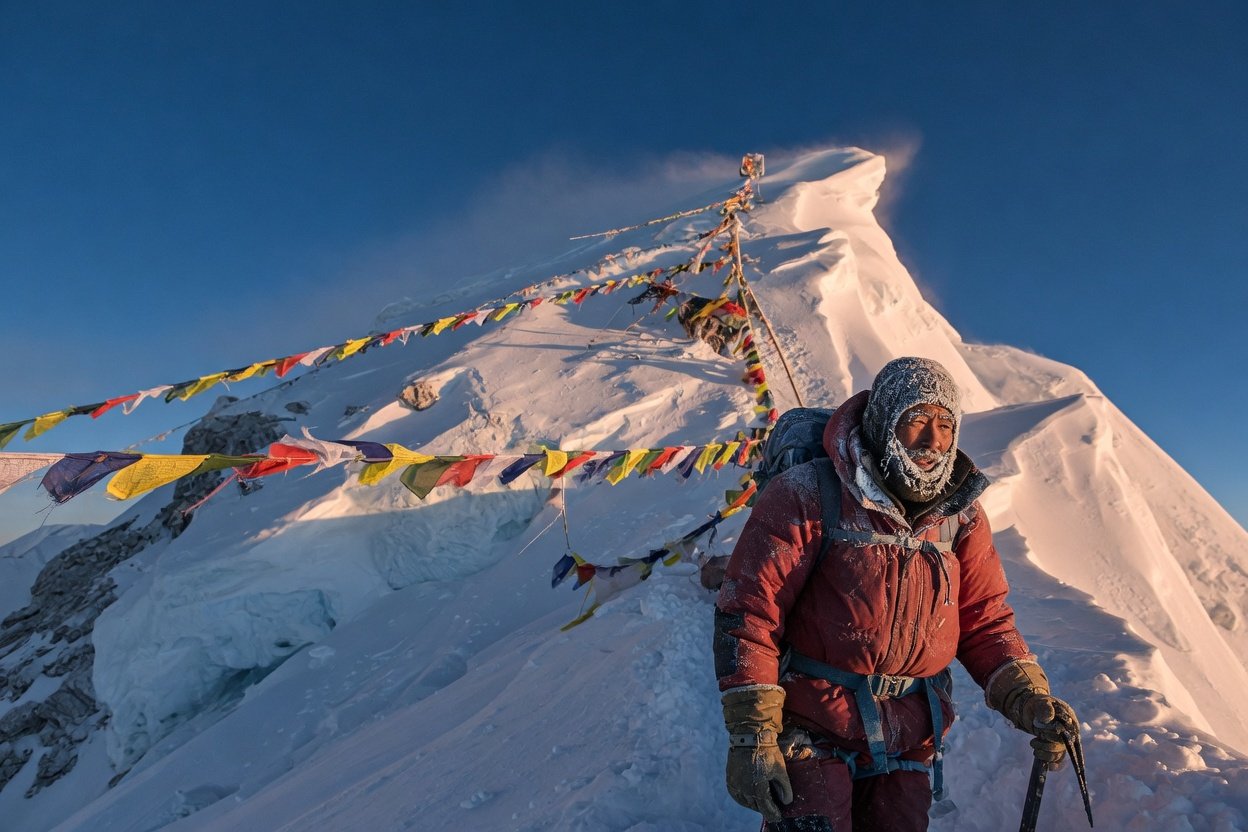
Everest Without Oxygen: The Few Who've Done It
Doctors once said it couldn't be done. In 1978, Reinhold Messner and Peter Habeler did it. Only 232 people have summited Everest without bottled oxygen, about 1.7% of all summiters. Here's why it's so hard.
Almost everyone who climbs Mount Everest breathes bottled oxygen near the top. A tiny fraction don't. Through the end of 2025, only 232 climbers had reached the summit without supplemental oxygen, about 1.7% of all Everest summiters, according to Himalayan Database figures compiled by Everest reporter Alan Arnette.
Why it's so hard
At the summit, 29,032 feet up, each breath holds only about a third of the oxygen you'd get at sea level. Above about 26,000 feet, in what climbers call the death zone, the body can't adjust. It slowly breaks down.
Without bottled oxygen, climbers face:
- Extreme exhaustion. Every step can take several breaths.
- Foggy thinking, at the exact moment decisions matter most.
- Frostbite, because the body pulls blood away from the hands and feet.
- Altitude sickness: fluid in the lungs (HAPE) or swelling of the brain (HACE), both deadly.
1978: Messner and Habeler
Before 1978, many doctors and climbers believed a human couldn't survive at the top of Everest without extra oxygen. On May 8, 1978, Italian climber Reinhold Messner and Austrian Peter Habeler proved them wrong.
Their first attempt that spring failed. Habeler got food poisoning, and Messner was turned back by a storm. On the second try they reached the top. Messner later described himself near the summit as "a single narrow gasping lung, floating over the mists and summits."
1980: Messner alone
Two years later, Messner went back and climbed Everest solo and without oxygen from the Tibetan side, during the monsoon season. It is still considered one of the greatest feats in mountaineering.
1995: Alison Hargreaves
British climber Alison Hargreaves became the first woman to summit Everest without bottled oxygen and without the help of Sherpas carrying her gear, in May 1995. She died later that year on K2.
The numbers today
From Alan Arnette's analysis of the Himalayan Database through December 2025:
- 232 climbers summited without oxygen since 1953.
- That's about 1.7% of all summiters.
- Climbers attempting without oxygen succeeded about 4% of the time, compared with about 80% for climbers using it.
Why do it?
For many climbers, using bottled oxygen changes the mountain. With it, the summit feels closer to a much lower peak. Without it, you face Everest on its own terms. Purists see a no-oxygen ascent as the real test of the mountain.