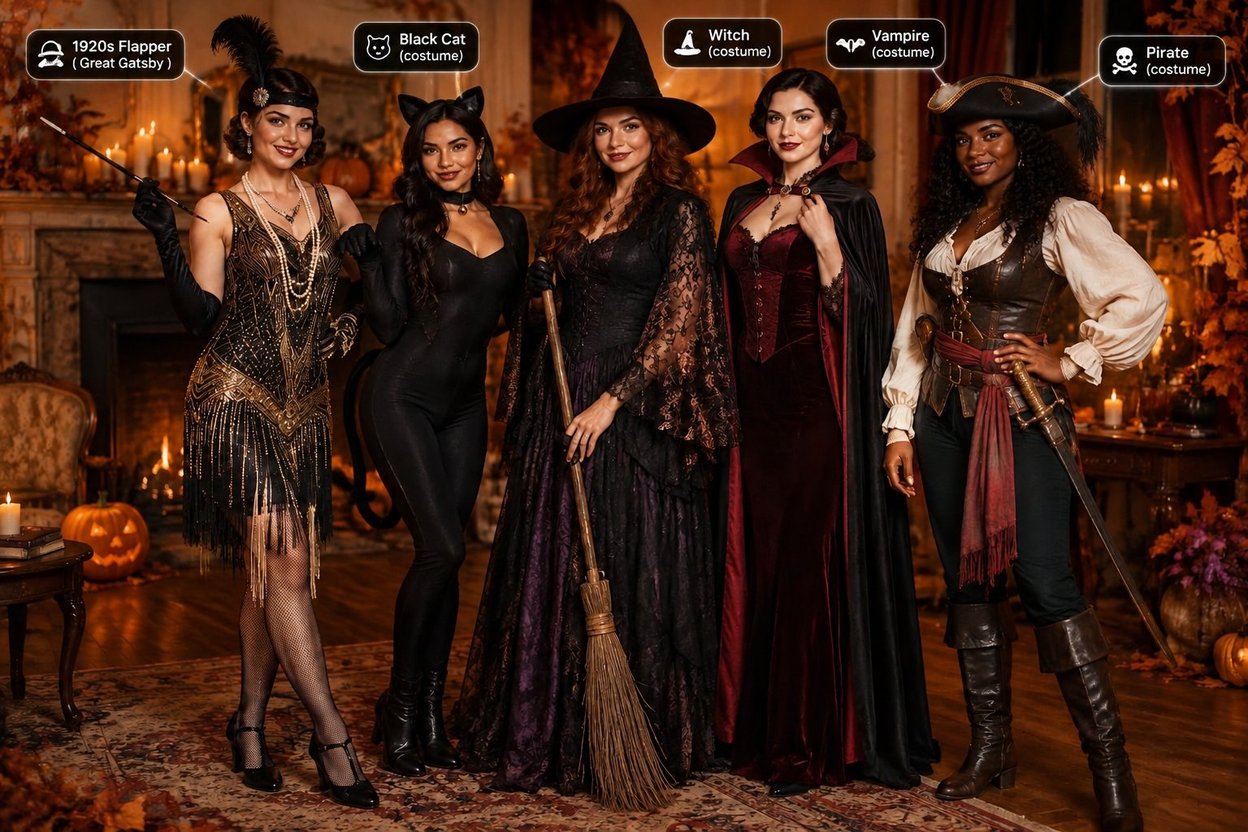
Are people using AI to plan their Halloween costumes?
Many people use AI for Halloween shopping and brainstorming, but fewer name it as a costume inspiration source. Here's what the surveys show.
You may turn to AI when your costume idea stalls, then still look to friends, search results, or stores for inspiration. Yes, people are using AI to plan Halloween costumes, mainly to brainstorm ideas and support shopping decisions. Survey results range from 8% naming generative AI as an inspiration source to 47% using AI tools for Halloween shopping, reflecting different questions and measures.
For you, that makes AI a useful starting point, not the dominant source of costume ideas. Its role spans brainstorming, product research, and new virtual try-on tools, while online search remains a major source of inspiration.
The answer: yes, for ideas, but fewer rely on it
Many consumers use AI for Halloween shopping, though fewer name it as a source of costume inspiration. The National Retail Federation’s 2026 survey found that 47% of consumers use AI platforms and tools to support Halloween shopping. The most common uses were brainstorming during planning, reported by 34%, and getting recommendations during product research, reported by 32%. NRF’s survey measures shopping broadly, so those figures do not isolate costume planning.
Epsilon reported that 45% use AI for Halloween shopping, with the figure reaching 70% among Gen Z. Deloitte’s results look different: only 8% of households named generative AI tools as a source of Halloween ideas, and about one in five Halloween spenders said generative AI would influence their spending decisions.
Those figures describe distinct behaviors. Asking AI for product recommendations counts as shopping support, while naming it as an inspiration source captures a narrower role. You can use AI to develop a costume concept without treating it as your main source of ideas or letting it determine what you buy.
Why the numbers differ
The percentages differ because the surveys ask about different parts of Halloween planning. NRF asked about Halloween shopping broadly, including brainstorming and product research. Deloitte asked households where they get Halloween ideas and whether generative AI would influence spending.
A HalloweenCostumes.com survey found that 37% use generative AI for décor ideas, costume concepts, or event planning. That combines several uses in one figure, so it does not measure costume planning alone. Prosper’s Phil Rist described the activity as using AI tools “to brainstorm costumes and decorating themes.”
For you, the wording changes what a survey number means. A person who asks an AI tool for a theme while planning may count in a broad shopping survey and a combined planning survey, while giving a different answer to a question about inspiration sources. Read each percentage as a measure of the behavior its question names, not as a direct count of people choosing AI to plan a costume.
What people actually ask AI to do
People use AI for practical shopping help as well as ideas. Epsilon found that 29% would use AI to decide where to buy, 28% would read AI-summarized reviews, and 26% would ask it to build a shopping list. Another 26% would use AI after purchase for tutorials.
These tasks connect AI to several stages of Halloween shopping. You might use a tool to compare places to shop, make sense of reviews, organize a list, or get instructions for using an item after it arrives. Epsilon also reported that 55% say they would never use AI for Halloween shopping, showing that adoption is far from universal.
Deloitte found that 32% of early Halloween shoppers plan to use generative AI. That figure describes a specific group and planned use, while Epsilon’s percentages cover particular shopping tasks. Together, the results suggest that AI use ranges from early idea generation to decisions made during and after a purchase.
Is AI replacing search?
Search remains a major source of costume inspiration, and the surveys show conflicting trends in its use. NRF found that online search was the top costume-inspiration source at 32%, down from 37% and the lowest share in a decade. HalloweenCostumes.com found the opposite pattern: search engines were the starting point for 43%, up from 20% in 2024.
Neither survey establishes that AI caused search use to rise or fall. The figures come from separate surveys, and the change in one does not explain the pattern in the other. Retail Insight Network also noted that NRF’s survey does not show whether AI changed what consumers bought.
For you, search and AI serve as separate routes into costume planning. Search can lead you to existing ideas, while a prompt can help generate a concept or narrow your options. The survey figures describe reported inspiration and shopping behavior, not a direct handoff from one tool to another.
New tools this season
A new virtual try-on feature gives you another way to explore outfit ideas. OpenAI launched a ChatGPT virtual try-on on October 1, 2026. You upload a selfie or full-body photo, and the feature uses the ChatGPT Images 2.5 model.
Business Insider’s tester reported that the tool worked for everyday outfits but “couldn’t handle a Halloween costume.” That result points to a gap between trying on ordinary clothing and visualizing a themed look; it does not establish how the feature performs for every costume idea.
Google promoted its AI tools, including Mixboard, for brainstorming costumes for people and pets in 2025. That gives you an earlier example of AI being positioned as an idea-generation aid. This season’s try-on feature adds a visual step, though the reported Halloween test did not produce a usable costume preview.
What it looks like online
A handful of posts on X show how the costume-planning idea circulates online, but they are anecdotes, not survey data. In late September, a prompt spread that asked people to upload a photo and ask ChatGPT who they should dress up as.
Some users pushed back, suggesting people should go buy a costume. One user said ChatGPT distorted her body in a costume preview. Those reactions describe individual posts and experiences; they do not show how common the prompt is or how reliably the tool handles costume images.
If you try a photo-based costume prompt, treat its output as a rough visual suggestion. The online examples show both curiosity about AI-generated ideas and concerns about the results.